
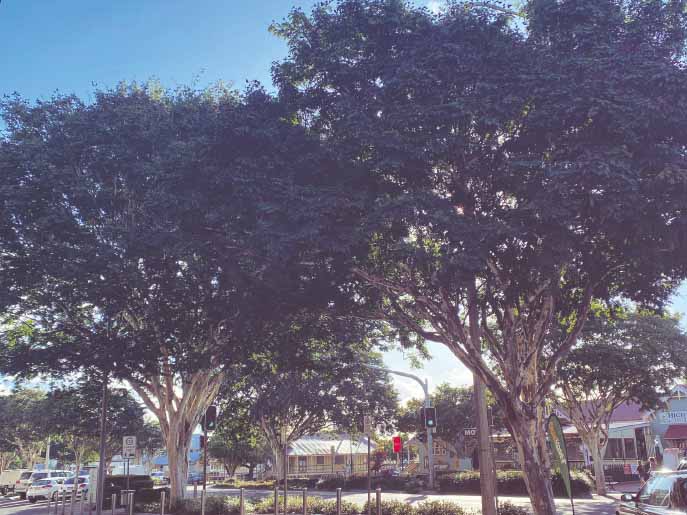
Have you ever paused to admire the striking Leopard Trees adorning our stretch of the Bruce Highway?
These towering beauties, reaching up to 20 meters high, originally hail from tropical America—think Brazil and Bolivia—and have found their perfect home right here in our town. Formerly known as Caesalpinia ferrea, the Leopard Tree earns its name from its trunk’s stunning transformation. Starting as a smooth, light buff-yellow, it matures into a mix of grey and beige bark, peeling off in jagged strips that resemble a leopard’s hide. But these trees aren’t just about looks — they’re a useful addition to our ecosystem!
As members of the legume family, they enrich our soil by fixing nitrogen, ensuring our surrounding soil stays healthy and vibrant.
And here’s a little-known secret: their roots and bark have medicinal properties too, used traditionally to manage diabetes and treat various ailments like sores, coughs, and asthma. Come springtime, these remarkable trees burst into bloom with fragrant yellow flowers at their branch tips. Later in the year, their seed pods turn from thick green to dark brown, becoming woody and flat as they mature. If you plan on growing them from seed you may need to grab your hammer. These seed pods are hard and they also need to be scarified before planting (placed in boiling water and allowed to cool).
And let’s not forget about their wood, dense and heavy enough to sink in water, earning it the Latin name ‘ferrea,’ meaning ‘iron.’ This durable wood is prized for creating guitar fingerboards, flooring, and elegant furniture pieces that stand the test of time.
So, next time you’re driving along the Bruce Highway, take a moment to appreciate our magnificent Leopard Trees, especially when they are lit up at night. They’re not just part of our landscape—they’re a symbol of our town’s natural beauty, strength, and resilience.
August 2024 – Chitchat Newspaper