
The Gregory River – Olea Paniculata & Ficus fraserii
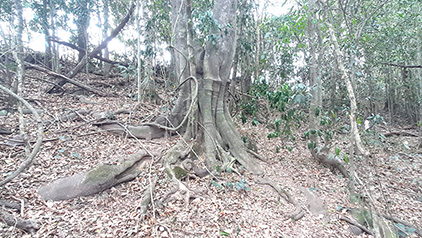
In the serene landscape of the Gregory River, two remarkable botanical specimens have recently been highlighted by Bundaberg Landcare. Whilst journeying along the river some native Ficus Fraserii (sandpaper figs) and Olea Paniculata (Native Olive) were photographed and catalogued. These ancient trees contribute to the Isis/Bundaberg region’s rich natural tapestry and reveal intriguing aspects of local and international flora.
The Gregory River winds its way through the Isis region, eventually meeting up with the Isis River near Woodgate and Burrum Heads. It has been just over a year now since the opening of the Gregory River Water Treatment plant which was a much needed upgrade for the region. The Gregory River holds a rich display of native flora and fauna and was recently explored by members of Bundaberg Landcare group.
Ficus Fraserii: A Botanical Marvel
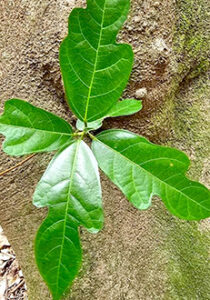
Amidst the diverse vegetation along the Gregory River, a notable discovery was made in the form of the Ficus fraserii, also known as the sandpaper fig. This specimen, characterized by its rough, sandpapery leaf surface and lobed leaves, is an excellent example of the river’s resilient plant life. It had survived decades of droughts and floods with stunning buttressed roots. The discovery was initially puzzling due to the unusual texture and leaf shape, leading to speculation about its identity. Stephen Cameron confirmed that the tree is indeed Ficus fraserii. The lobed leaves of this species harken back to ancient fig trees, revealing a connection to the past of the area’s flora. This identification not only enriches our understanding of the local ecosystem but also underscores the river’s role as a sanctuary for unique and ancient plant species.
Olea Paniculata: The Ancient Native Olive
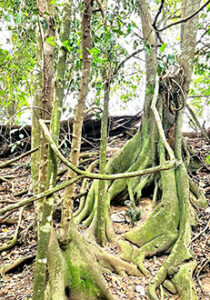
Not far from the Ficus fraserii, another fascinating find was made: a magnificent Olea paniculata, commonly known as the Native Olive. This particular tree stands out not only for its size but also for its impressive age—estimated to be over 300 years old. This species, part of the Oleaceae family, is remarkable for its glossy green leaves and smooth, dark grey trunk.
The Olea paniculata is a species with a broad geographical range, extending from New Guinea through Malaysia, India, China, and into Pakistan. Its presence in the Gregory River area adds to the region’s botanical diversity and highlights the tree’s international significance.
Historically, the fruit of the Olea paniculata was thought to be inedible due to its hard texture. However, some sources indicate that Indigenous Australians did consume these fruits, despite their limited flesh and rough texture. Additionally, the fruits are an important food source for various Australian bird species, including the Australian king parrot, brown cuckoo-dove, topknot pigeon, rose-crowned fruit-dove, wompoo fruit-dove, white-headed pigeon, green catbird, and regent bowerbird.
A Testament to Resilience
Both the Ficus fraserii and Olea paniculata serve as symbols of resilience and adaptation. The Ficus fraserii has withstood the test of time, enduring floods and droughts, while the Olea paniculata has thrived for centuries, contributing to the biodiversity of the Gregory River area.
These discoveries not only offer insight into the botanical richness of the region but also remind us of the intricate connections between plants, animals, and the environment. As we continue to explore and document these ancient species, we gain a deeper appreciation for the natural heritage of Queensland and the importance of preserving these living relics for future generations.
Thanks to Bundaberg Landcare for their generous article and photos provided.
October 2024