
A Legacy of Free Speech and the Struggle for Truth in Today’s Media
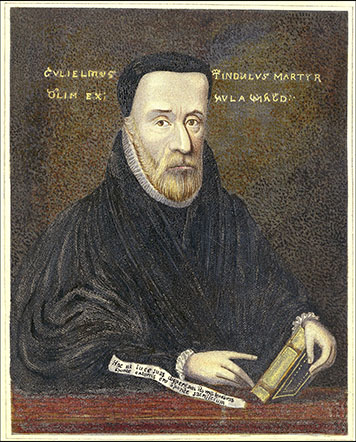
In the 16th century, William Tyndale took a bold step that would forever change the landscape of religious and intellectual freedom. His decision to translate the Bible into English—at a time when the Roman Catholic Church controlled religious texts in Latin—was nothing short of revolutionary. Tyndale believed that every English-speaking person had the right to read and interpret the Bible for themselves, unmediated by church authorities.
For this, he paid the ultimate price: William Tyndale was violently killed on October 6, 1536. But his work endured, and his translations profoundly influenced not just religious thought, but the very fabric of the English language and the principles of free expression.
Tyndale’s story is not just one of defiance against religious authorities but also one of courage in the face of overwhelming odds. He challenged an entrenched system that sought to limit access to knowledge and, by doing so, restricted the freedom of individuals to think for themselves. In a time when control over information was consolidated in the hands of a few, Tyndale’s translations were an act of defiance—a fight for truth and accessibility in an age of oppression.
Today, as we navigate the rapidly evolving media landscape, Tyndale’s legacy feels as relevant as ever. Local print media, once the cornerstone of informed democratic debate, now finds itself under threat from monopolistic corporate interests that dominate the news cycle. Larger conglomerates increasingly control the flow of information, often sidelining local voices and the nuanced perspectives that communities depend on.
The recent closure of local newspapers and the shrinking of independent journalism have created a dangerous void, one that allows misinformation and propaganda to spread unchecked.
The parallels between Tyndale’s time and our own are clear. Just as Tyndale faced persecution for making knowledge accessible to the common people, local newspapers today face mounting financial and political pressure to conform to outside interests. Investigative journalism, the lifeblood of local newspapers, is underfunded, and editorial independence is often compromised in favor of profit margins or political agendas.
In such a climate, we must remember that local print media plays a vital role in maintaining an informed nation. Local news outlets provide a valuable tool for the everyday person to discuss and challenge power structures. Whether it’s covering corruption, amplifying underrepresented voices, or simply providing trustworthy reporting, local newspapers safeguard the democratic process by ensuring that people are not left in the dark.
The very freedoms Tyndale championed are being used today in troubling ways. In some circles, particularly on the far left, calls for speech restrictions have emerged, with the argument that certain viewpoints, especially those deemed “offensive” or “harmful” should be silenced for the greater good.
Ironically, this mirrors the very forces of censorship that Tyndale himself fought against centuries ago. While Tyndale risked everything to ensure that knowledge and truth could be freely expressed, today’s battle is about preserving the right to express ideas (even controversial ones) without fear of being silenced by ideological extremes.
If we value truth, freedom, and accessibility, we must support local print media, not just as a tool for democracy, but as a safeguard against the growing tendency to silence opposition in the name of progress.
As Tyndale’s courage helped ignite the Reformation, so too must we continue the fight for independent journalism. In the battle for free speech, the stakes remain as high as ever.
The Chitchat Newspaper has been publishing since 1999. We offer 100% free community newspapers to over 5000 local residents at over 100 pickup points from Bundaberg to Childers, Burrum to Burnett Heads, Childers to Gin Gin, and everywhere in between.
Published April 2025