
Unlocking Financial Freedom: How Understanding Economics and Media Tricks Can Transform Your Life
I never took an interest in economics until we had our first child. I started questioning why I was spending the best hours of my day working for a paycheck that was hit with one-third in income taxes, an additional 10% GST, and another 2% Medicare levy. I was also puzzled by why house prices had doubled in just a year. We couldn’t save money quickly enough to meet the bank’s deposit requirements for purchasing our first home. I didn’t want to be stuck in a cycle of working just to pay bills and miss out on raising our kids. I realized I had been misled by poor education and that the strategies that worked for previous generations wouldn’t work for us. The traditional path of going to university, taking on student debt, landing a good job, and paying taxes doesn’t seem to be a viable way out of the growing mess that’s threatening Australia’s middle class.
So, how can understanding sound economic principles help you escape this mess?
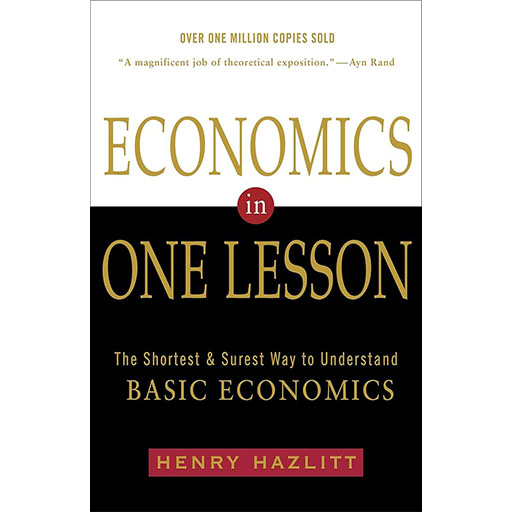
If you grasp solid economic principles, you can see through the countless fallacies and manipulations in the mainstream media. This knowledge helps you make informed choices about your time and money. I found a fantastic book titled Economics in One Lesson by Henry Hazlitt, first published in 1946. It’s as relevant today as it was then.
According to Hazlitt, the essence of economics can be reduced to a single lesson: The art of economics involves not just looking at the immediate effects of any policy or action, but also considering its longer-term consequences and how it affects everyone, not just one specific group.
Hazlitt emphasizes two key ideas:
1. Don’t Just Think About the Short-Term Effects: You shouldn’t only focus on the immediate outcomes when a new policy or law is introduced.
2. Don’t Focus on One Group Only: You need to consider how a policy impacts everyone, not just a specific group of people.
A sound economic policy should account for both the big picture and the detailed impacts on everyone.
Hazlitt uses this approach to analyze various policies, including taxes, rent control, labor unions, and savings.
Another concept that complements Hazlitt’s Economics in One Lesson is the Hegelian Dialectic (Problem, Reaction, Solution).
The Hegelian Dialectic, introduced by the German philosopher Georg Wilhelm Friedrich Hegel, describes the development of ideas and historical processes through three steps:
1. Thesis: Create a problem.
2. Antithesis: Generate a reaction or opposition to the problem (e.g., fear, panic).
3. Synthesis: Offer a solution to the problem created in step one, which would have been difficult to impose without the psychological conditioning achieved in steps one and two.
Watch for this “Problem, Reaction, Solution” pattern in the media and make a note of it when you spot it. Feel free to email the Chitchat or write a letter to the Editor if you notice any examples of this.
Understanding economic truths and spotting lies will help set you on a path to financial success, offering greater freedom and opportunities as you navigate economic choices throughout your life.
What’s to come?
In the coming months, I’ll review Hazlitt’s 25 chapters of Economics in One Lesson and discuss how recognizing common fallacies can help you achieve financial independence and personal freedom.
Written by John E Middleclass.

October 2024