

Gallipoli’s Great Escape Act – How clever tactics helped ANZAC soldiers slip away from the Turks.
The evacuation of Gallipoli in 1915 remains one of the most dramatic and skillfully planned operations of World War I. However, even over a century later, there is still confusion about one key detail: which troops were the last to leave the Gallipoli Peninsula?
During the final stages of the campaign, Allied forces, including the ANZAC troops from Australia and New Zealand, faced extreme danger. They were trapped on the peninsula by the Turkish army and needed to evacuate as quickly and quietly as possible to avoid heavy casualties. The operation, however, had to be carried out under a veil of secrecy to prevent the Turkish forces from launching a surprise attack that could have resulted in thousands of deaths.
The primary goal of the evacuation was to escape with as few casualties as possible. For this, the Allies needed to deceive the Turks into thinking they were still fighting fiercely. This was achieved through a series of clever tricks and tactics, one of the most important being the “big quiet.”
The Big Quiet
For four days before the actual evacuation, no shots were fired. This strategic silence was meant to mislead the Turkish forces into thinking the ANZAC troops were no longer as active. The quiet was not accidental—every shot that rang out was calculated to ensure the enemy grew accustomed to a quieter environment. By doing so, the Allies hoped that when they made their move, the Turkish forces would not immediately react.
But simply being silent wasn’t enough.
The Allies also had to simulate the sound of ongoing fighting after they left, to keep the Turks distracted while they evacuated. And that’s where the clever innovation of the “jam tin timers” came into play.
The Jam Tin Timers
The drip rifle was invented by Lance Corporal W. C. Scurry of the 7th Battalion, AIF, with assistance from Private A. H. Lawrence. He proposed using two empty jam tins to create a timed mechanism that could simulate gunfire. The setup was simple yet effective: two tins were stacked one on top of the other. The top tin was filled with sand or water, and over time, the contents would slowly drip into the bottom tin. Once enough weight had accumulated in the bottom tin, it would fall and trigger a rifle that had been placed in the firing line, causing it to fire.
These “pop off rifles” were strategically set in place just before the evacuation. They were designed to go off after the last of the men had left the trenches, making it appear as if the ANZAC troops were still engaged in battle when, in fact, they were already long gone.
The Last to Leave?
In the confusion surrounding the evacuation, a key detail remains uncertain: which troops were the last to leave Gallipoli?
A letter from a New Zealand soldier which made its way into the Isis RSL sheds light on the ongoing confusion as to who was part of the last group of soldiers to leave Gallipoli. He had always thought that the New Zealanders were the final group to evacuate.
The letter describes that the author had been part of a group of 31 New Zealand soldiers tasked with dismantling a machine gun and evacuating from a position high on Apex Ridge. As he made his way down, he accidentally knocked over a Staff Major—who was enraged by the mishap and shouted loudly. In the tense atmosphere, the author, feeling the stress of the situation, responded by telling the Major to be quiet so the Turks wouldn’t hear him.
The authors letter suggests that the New Zealanders were among the last to leave, but it contradicts the version of events that is more widely accepted, which suggests that it was an Australian unit that was the last to go.
Shared Experience
Regardless of which party was truly the last to leave, both the New Zealanders and Australians shared the same experience.
The evacuation was fraught with danger, and the soldiers were under immense pressure to leave without being noticed by the Turkish forces. There were contingency plans in place, including naval support, to prevent an attack on the troops as they withdrew.
For many of the soldiers, it was a moment of mixed emotions.
As they made their final exit from Gallipoli, they were not just relieved to survive—they were also haunted by the horrors they had endured. And, for most, there was no medal or recognition for their service at Gallipoli, despite the sacrifices they had made.
A Final Mystery
Today, over 100 years later, the question of who was the last to leave Gallipoli remains somewhat of a mystery. The confusion between the Australian and New Zealand troops highlights the chaos and high stress that defined the final days of the Gallipoli campaign. Both groups played a crucial role in the success of the evacuation, which, against all odds, resulted in relatively few casualties.
At the time, British generals estimated that half the force would be lost in any attempt to withdraw because the Turks could not fail to notice as the trenches were so close. In the event, the Turks were so deceived that 80,000 men were evacuated with only about half a dozen casualties.
The story of Gallipoli is one of courage, creativity, and sacrifice. Whether it was an Australian or New Zealand unit that was the last to leave may never be fully answered, but what is certain is that both nations share in the history of this remarkable operation.
This article was compiled with evidence handed to the Chitchat Newspaper from Isis RSL Sub Branch in Childers Qld and the Australian War Memorial Website. Please see Terry for further information and sources.
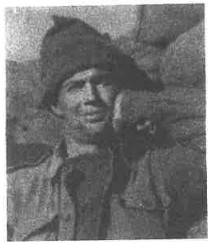
(Jack Currie)
Published April 2025