
Have you ever wondered how much things cost back in the day compared to now? Let’s take a look at how the prices of everyday items and houses have changed in Australia over the past 50 years. The difference might surprise you!
Groceries: Then vs. Now
The year is 1975, The biggest movie of the year was Jaws, Killer Queen is on the wireless, you and the missus just got paid a combined $346.15 for the fortnight and your off to a trip to the shops.
You head to the store, reach into your pocket and grab a $5 note. Now lets see what you could buy…
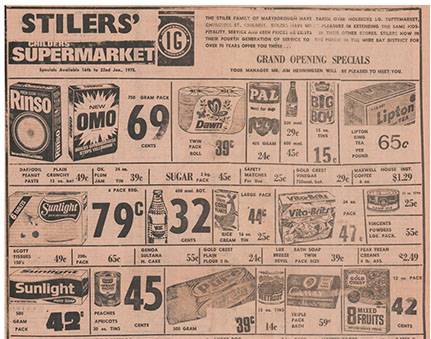
10 tins of Pal dog food: $2.40
2 packs of soap: $0.84
Large box of cornflakes: $0.44
2 tins of peaches: $0.90
2 bottles of Cottees lemonade: $0.30
After purchasing all that, you’d have just 12 cents left. And the best part? That $5 would only be 1.4% of your family’s salary for two weeks!
Now, let’s see how much the same items cost in 2025:
10 tins of Pal dog food: $36.00
2 packs of soap: $4.50
Large box of cornflakes: $6.90
2 tins of peaches: $6.00
2 bottles of Cottees lemonade: $4.60
The total now is $58.00. While this is still only 1.3% of an average family’s salary, the price increase is significant.
In 1975, you could have bought all of these items for just $5, and still had 12 cents left over.
Now, you’re spending an extra $53 for the same things. Even though groceries still take up a similar percentage of the family budget, the total amount of dollars spent has jumped dramatically, which reflects the impact of inflation.
While wages have increased, they haven’t always kept pace with rising prices on assets.
Check this out…
Houses: The Big Price Jump
Housing is where the cost increases really hit hard.
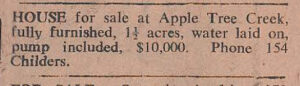
In 1975, the average house in Brisbane cost just $17,500. A house was about two times your family’s yearly income, making it relatively affordable.
Fast forward to 2025, and the average house price in Brisbane has skyrocketed to $937,479. Now, a house costs about eight times a family’s yearly income. This massive increase in house prices has made it far harder for younger generations to buy a home, especially with wages not rising as quickly.
The Australian Dollar: How It Lost Value
To understand why everything seems more expensive today, we need to look at how the Australian dollar has changed over time.
In 1932, Australia stopped using the gold standard, meaning the Australian dollar’s value was no longer tied to gold. In 1946, the government also started reducing the amount of silver in its coins, further eroding their value.
Then, in 1966, Australia switched from the old British-style currency to the decimal system. The florin, which was worth two shillings (24 pence), was replaced by the 20-cent coin. The old florin, due to its high silver content, was worth significantly more than its nominal value—around $16.66 in today’s money (2025). This made the florin a more valuable coin compared to what it would be after the switch to decimal currency.
However, this currency change, along with inflation over the years, contributed to the erosion of the dollar’s purchasing power.
By the 1970s, inflation had already begun to significantly reduce the value of money, which has continued into the present day, making goods and services more expensive over time.
It’s not the shopkeepers, it’s not the employers, it’s not even the real estate owners, it’s the funny money.
(These newspaper clippings are courtesy of the Isis Recorder (Isis District Historical Society Inc))

John E Middleclass
Published February 2025