
Let’s continue our series on Economics in One Lesson.
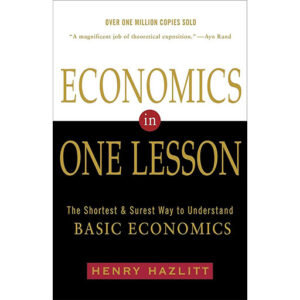
In Chapters 5 and 6 of Economics in One Lesson, Henry Hazlitt explains how government spending and taxes affect the economy in ways that might not be obvious at first. Hazlitt’s ideas show that understanding how taxes and government spending work can help you protect and grow your money. By being smart about where you invest and how you manage your money, you can keep more of it and make it work for you, instead of letting taxes take it away. Whether it’s saving, investing, or even thinking about where to live or work, there are ways to reduce the impact of taxes and help your money grow.
In Chapter 5 of Economics in One Lesson by Henry Hazlitt, titled “Public Works Means Taxes,” Hazlitt explains the hidden costs of government spending on things like building roads, schools, or other public projects.
While these projects might seem like good ideas because they create jobs and improve infrastructure, Hazlitt warns that they are paid for by taxes, which means the government takes money from people and businesses in order to fund these projects.
When the government collects taxes to pay for these projects, it reduces the amount of money people and businesses have to spend on other things. This means that although the public works create jobs in the short term, they can actually hurt the economy in the long run because the money could have been used in other ways to help businesses grow, create more jobs within pre-existing businesses, or improve products and services.
In simple terms, Hazlitt’s point is that public works funded by taxes don’t actually add to the economy in the long run. Instead, they take money from the private sector and redirect it into projects that may not be the best use of resources.
So, while public works might look like a positive thing, the way they’re paid for (through taxes) can make the economy weaker overall. Can you name any large government projects that are perfect for a photo op in our local area?
In Chapter 6 of Economics in One Lesson, called “Taxes Discourage Production,” Hazlitt explains how taxes can make people and businesses less willing to work hard or produce more.
When the government takes a portion of people’s income or businesses’ profits through taxes, they have less money to spend or invest. This can make people less motivated to work harder or take risks.
Hazlitt also says that when businesses are taxed, it can make things more expensive to produce. As a result, businesses might cut back on how much they make, lay off workers, or raise prices.
For individuals, paying higher taxes means they get to keep less of what they earn, which reduces their motivation to work harder or produce more.
The main idea is that while taxes may be needed to fund government services, they can slow down economic growth because they discourage people from working hard, investing, and creating new ideas. In the long run, this can make the economy weaker.
What do you think Australia’s productivity would be if the federal government dropped all income taxes, capital gains taxes and GST for one year?
So, what can you do to shelter yourself from predatory attacks (A-TAX)? …..
Play by the rules!
Yes, there are plenty of 100% legal ways to reduce your taxes and they often revolve around doing what the government needs or wants people and businesses to do.
The best way to protect yourself is to:
- Study
- Talk to your accountant or a financial planner
- Have you considered starting a business and ditching your high-taxed employee wage?
- Could you provide housing for someone else?
- What about a SMSF?
- Get creative but always stay within the law.
In the lead-up to the End of Financial Year, you may want to patriotically lobby for tax reform or follow the myriads of people who have moved themselves or their business to a tax-friendly jurisdiction where there are less sharks in the water.

Written by John E Middleclass
Published February 2025