
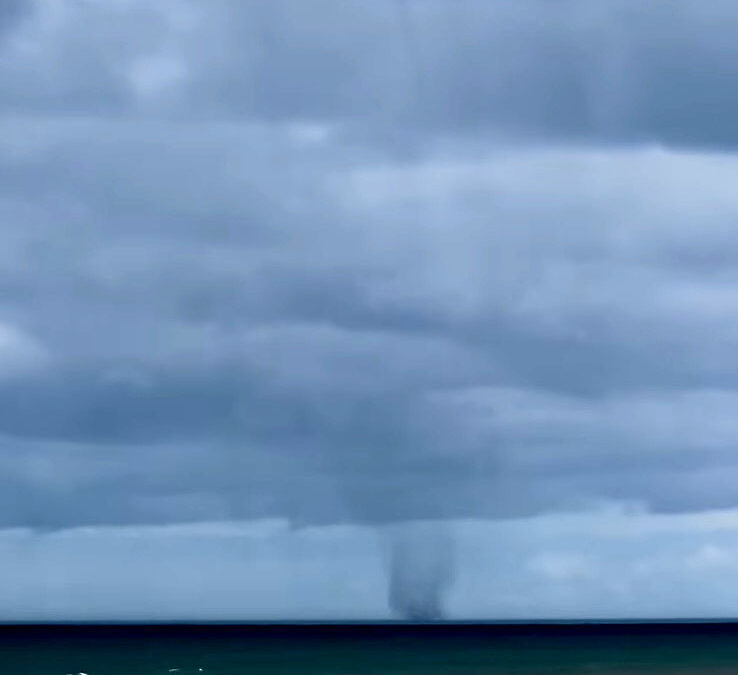
A tornado that forms over water
My first encounter with a water spout happened when I was younger, surfing in the beautiful town of Gerroa, NSW, at the northern end of the famous 7 Mile Beach. I couldn’t believe what I was seeing when, through the dark clouds in the distance, I spotted what looked like a tornado over the water. As a kid, I’d watched the movie Twister and occasionally read news stories about towns in the U.S. being destroyed by these huge displays of nature’s power.
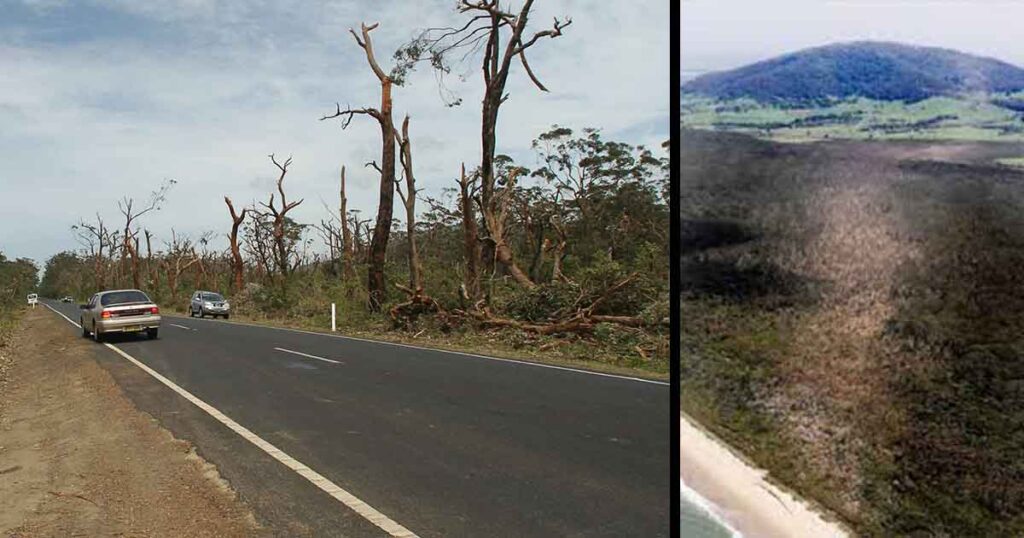
Tornado and Waterspout in Gerroa and Kiama region NSW
I was surprised when Trudy Lynch, a member of the We Love Woodgate Facebook page, shared an incredible video of a water spout right here at Woodgate Beach. Her post sparked my curiosity, and I decided to do some research to learn more about these fascinating natural events.
Water spouts are a type of tornado that forms over water, resembling a rotating column of air and water. In Australia, they occur most commonly along the eastern and northern coastlines, where warm sea temperatures and atmospheric conditions create the perfect environment for these phenomena.
Water spouts are typically seen in tropical and subtropical regions, particularly during the warmer months of the year. The most common locations for these water spouts are along the Great Barrier Reef, Queensland, and northern New South Wales. They are often associated with thunderstorms, strong wind patterns, and unstable atmospheric conditions.
Although water spouts may appear violent, they are usually less powerful than land-based tornadoes. The intensity of a water spout depends on the strength of the storm that generates it. In general, Australian water spouts are classified into two main types: tornadic and non-tornadic. Tornadic water spouts are linked to severe thunderstorms and can sometimes cause damage, while non-tornadic water spouts tend to be weaker and are generally harmless.
Water spouts, with their dramatic and mysterious appearance, have long been a subject of folklore and maritime superstition. In many cultures, they are seen as omens or manifestations of supernatural forces. One common myth is that water spouts are “sea serpents” or the work of mythical sea creatures. Water spouts also occasionally feature in tales of the “Kraken,” a legendary sea monster that could cause massive whirlpools. These stories describe the Kraken as stirring the waters, sometimes creating whirlpools or water spouts as it rose to the surface.
While water spouts are capable of causing localized damage, they rarely destroy ships. The majority of water spouts are relatively weak and typically don’t possess the same destructive power as land-based tornadoes.
It’s truly remarkable how easy it is today to grab a phone and capture amazing events like this in real time. With just a few taps, we can document some of nature’s most spectacular moments. Not long ago, these kinds of events might have been seen only by a few people or left to legend. Now, thanks to smartphones, everything from rare weather phenomena to unexpected wildlife encounters can be shared instantly with the world. As technology continues to evolve, I’m sure we’ll see even more wild and unexpected moments caught on camera, making it easier than ever to witness and share the wonders of nature.
Thanks Trudy for sharing with us all.
Published February 2025