
So Why Does Everyone Still Feel Broke
Wages in Australia have more than doubled since 2010, and in areas like Bundaberg South, house prices largely kept pace with wage increases. But gold, silver, and tax bracket creep reveal a disturbing story.
In 2010, the “average” Australian worker earned just under $49,000 a year. Today, the “average” figure has climbed past $106,000.
On paper, Australian wage earners have never been richer. Yet ask around Bundaberg, Childers, or the Fraser Coast, and many locals will tell you the same thing:
“Everything is too bloody expensive. Bills keep piling up. Saving doesn’t get you anywhere. We have bigger salaries, but feel poorer than ever. What are our kids going to do?”
What’s happened in the Australian economy over the last 15 years?
On the surface, everything is more expensive. But how should we actually measure what is expensive? I would suggest measuring apples with apples, or so the saying goes.
The Bundaberg exception
Across much of Australia, housing has completely detached from wages. In Sydney and Melbourne, home ownership increasingly feels out of reach for average workers. But the numbers from Bundaberg South, for example, tell a very different story.
In 2010 the average Australian wage was $48,907 and the typical Bundaberg South house was around $250,000. In 2026 the average wage was about $106,657 and the typical Bundaberg South house is around $550,000. That means both wages and local house prices rose by roughly 120 per cent over the same period. The affordability ratio barely changed.
In 2010, a Bundaberg South house cost about 5.1 times the average annual wage. Today, it sits around 5.15 times.
Even mortgage pressure remained surprisingly similar. With interest rates around 5.9 per cent in both periods, repayments on a mortgaged property loan consumed roughly 29 per cent of gross wages in both 2010 and 2026. That is almost unheard of in modern Australia.
While capital cities and coastal regions spiralled into housing crises, Bundaberg South quietly remained tethered to average incomes. For regional Queenslanders, that is actually a remarkable success story. But housing is only one way to measure wealth.
What about New Car Prices?
In 2009, a brand new Hyundai Santa Fe 2.7L cost around $33,990. In 2025, a brand new Hyundai Santa Fe (Before On-Road Costs) was around $55,500. The percentage Jump for new cars: ~63.3% compared to the percentage Jump for average wages: ~120%
So, cars have actually become cheaper over time as well.
But are cars and housing the best measuring sticks? And that is where the picture becomes far more complicated.
The measuring stick problem
Inflation is usually discussed in dollars but critics argue that dollars themselves are the wrong measuring stick because the currency supply is constantly manipulated over time.
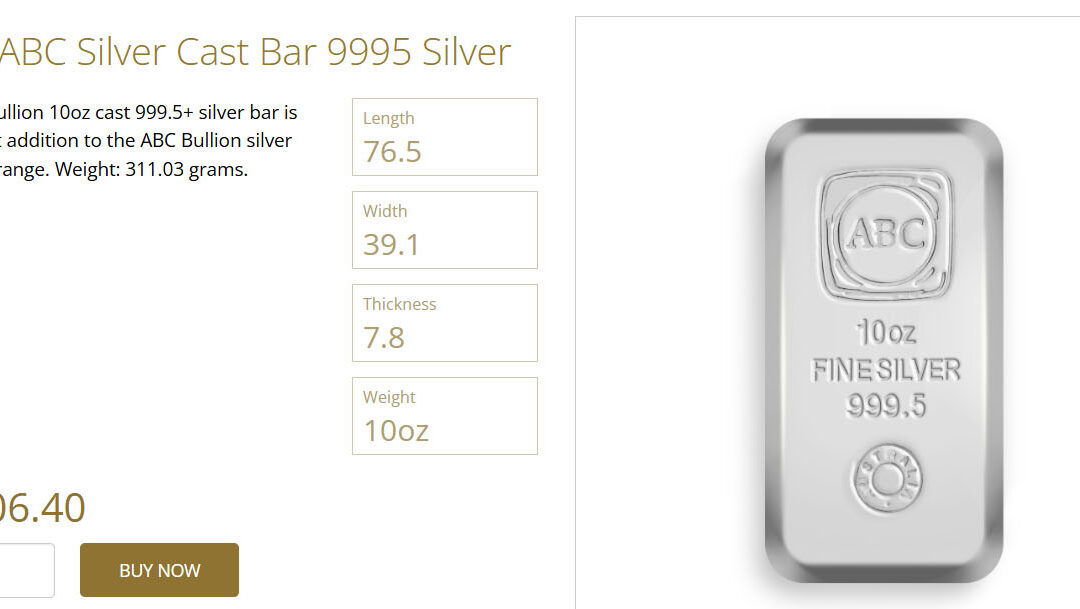
For thousands of years, civilizations relied on gold and silver as true money. These scarce metals can be found as elements within the periodic table, such as gold (Au) and silver (Ag). They are the perfect form of currency so long as they are not contaminated with lesser metals.
In 1813, Governor Lachlan Macquarie thought it fitting to decree silver as our nation’s first currency. 40,000 Spanish silver dollars were used to create two distinct coins. The New South Wales Holey Dollar and Dump were thus created.
Using precious metals as a long-term benchmark produces a confronting and deeply unsettling result.
In 2010, the average Australian salary could buy roughly 33.6 ounces of gold or about 2,329 ounces of silver. In 2026, despite salaries more than doubling in dollar terms, the same worker earns only about 15.2 ounces of gold and roughly 840 ounces of silver.
Measured in gold, as true money, labour purchasing power has more than halved. Measured in silver, as true money, it has collapsed by almost two-thirds.
The “Honest” Salary for 2026
If your pay had actually kept pace with the hard assets you’ve been tracking, here is what your paycheck would look like today:
To match your 2010 Gold Power:
In 2010, you earned 33.6 oz of gold. To buy that same amount today: 33.6 oz × $7,000 AUD. Target Salary: $235,200
To match your 2010 Silver Power:
In 2010, you earned 2,329 oz of silver. To buy that same amount today: 2,329 oz × $127 AUD (upper average). Target Salary: $295,783
If you want to be as “wealthy” as a person earning $48,907 in 2010, you shouldn’t be aiming for a wage of $106k—you should be aiming for $250,000. (I dare you to tell your employer what you should be earning.)
Why silver exploded
Silver is no longer simply jewellery or coinage. It has become a critical industrial metal used in solar panels, electronics, electric vehicles, battery systems and emerging AI infrastructure.
In 2010, silver averaged around $21 to $22 an ounce in Australian dollars. By 2026, it was trading closer to $111–$127 an ounce. It actually reached $170 an ounce at one point. Despite its growing industrial importance, silver remains a useful long-term monetary benchmark and a meaningful way to assess the erosion of purchasing power over time.
The technology illusion
It’s not all doom and gloom. While purchasing power may have weakened against long-term monetary benchmarks, everyday life has also become significantly more affordable in many unexpected areas, often in ways that are easy to overlook.
In 2010 families bought DVDs, paid for newspaper subscriptions, spent heavily on phone calls and data plans, purchased GPS units, cameras, music collections and expensive internet access.
Today, a single smartphone replaces almost all of it. Streaming services provide near-unlimited entertainment for a fraction of the 2010 price. Internet data is cheaper. Long-distance communication is virtually free. Electronics are vastly more powerful than they were 15 years ago. Technology and globalisation have acted as powerful anti-inflationary forces.
Manufacturing shifted offshore. Digital products became infinitely reproducible. Competition crushed prices on consumer electronics.
Australians today enjoy more convenience, entertainment and information access than any previous generation. But there is a catch. Technology, globalisation, and innovation are the only reasons you don’t feel significantly poorer. Technology has engaged in a massive “price war” against inflation to keep your daily expenses down. This is often called Deflationary Innovation.
But It cannot manufacture more land in Bundaberg South, it cannot print more silver into the earth’s crust and it cannot fully offset the rising cost of a range of hard assets.
BREAD AND CIRCUS
Ancient Roman writers once used the phrase “bread and circuses” to describe a people distracted by comfort and entertainment while deeper structural issues threatened to destroy their society.
Modern Australia is lacking colosseums at this point but the comparison raises uncomfortable questions.
Australians possess extraordinary lifestyle technology while simultaneously finding it harder to accumulate meaningful long-term assets.
It is becoming increasingly difficult to retire without the need for some form of government assistance. If you require a pension or benefits, you submit yourself to demeaning and intrusive government oversight. Australians are chained to employment and taxes. They are locked into a lifestyle of consumer debt and technological distractions. These chains lull everyday Aussies into a system of modern-day slavery, where many no longer realise they are bound.
The silent tax increase
Then there is tax. And this may be the part of the story that frustrates workers the most.
In 2010, an average worker earning $48,907 paid roughly $8,200 in tax and Medicare, an effective tax rate around 16.8 per cent.
In 2026, a worker earning $106,657 pays approximately $25,800, with an effective tax rate around 24.2 per cent.
Gross wages increased by about 118 per cent but tax paid increased by more than 214 per cent. This is known as bracket creep — where inflation pushes workers into higher tax brackets even when their real purchasing power has not increased proportionally.
The tax office treats nominal wage growth as real prosperity. Workers may have kept pace with local house prices, but the tax system increasingly treats them like the high-income earners of yesteryear.
That disconnect helps explain why many Australians feel their pay rises disappear almost as quickly as they arrive.
So, are we richer or poorer?
Compared with 2010 Australians own far better technology. Communication and entertainment are vastly cheaper. Cars have actually become more affordable. Housing in areas like Bundaberg South is surprisingly aligned with wages. Yet gold and silver became dramatically more expensive when measured in dollars, taxation consumes a larger share of income every year and continues to cripple workers and disincentivise the construction of rental housing. Housing price increases in regional areas are aligned with wage increases, but taxes are making it harder to afford housing. A flood of investors leaving major cities could soon push regional house prices much higher, and regional areas will suffer a lack of housing supply.
In many ways, the modern Australian economy resembles a paradox: people possess more consumer goods than ever before, yet feel increasingly anxious about long-term security. A household owns multiple screens, streaming subscriptions, and a newer ute — while simultaneously feeling one interest rate rise away from financial stress and ruin.
Perhaps the real measure of prosperity is not how cheaply we can buy imported technology, but how easily ordinary Australians can build stable, independent lives without being crushed by inflation, taxation and housing scarcity.
Written by John E MiddleClass
Chitchat Newspaper. June 2026.