
DELIVERANCE TAX

As of April 2026, the Tasmanian government will require content creators filming in national parks to buy a $100 commercial filming licence and hand over private data. Those wishing to film in Tasmanian national parks must now declare their intentions to the government in advance, divulge their secret locations, and submit their content plans for approval.
The licence applies to solo creators using handheld cameras, while drones are banned entirely. Popular content creators should start submitting photos of the public drop toilets in Tasmania’s national parks. Give it a few months, and the government will probably feature these iconic attractions in the next tourism brochure.
If you earn ANYTHING—money, travel perks, accommodation, or even free meat pie—you must pay to be creative. The Australian Taxation Office treats those same perks as taxable income.
There was a rumour of an indie filmmaker shooting a sequel to the 1972 movie Deliverance in the Tasmanian wilderness. They say he forgot to lodge his forms on time. Rumour has it that he was chased through the bush by officials in overalls. All that was ever found was a washed-up canoe and a National Park Infringement Notice nailed to the debris – or so the story goes…
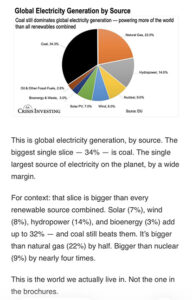
POWER AROUND THE WORLD
A snapshot of power around the globe.
YOUTUBE VIDEO FARM DISCOVERED

A big part of an Influencers revenue comes from Youtube. What we see online is not always what it seems — and a recent police sting has highlighted just how easy it can be to manipulate the numbers behind social media success.
A major part of many influencers’ and content creators’ income comes from platforms like YouTube. Once videos reach certain viewership levels, creators can place advertisements in their content and begin earning money. In simple terms, the more views a video receives, the more revenue it can potentially generate.
But where there’s money involved, scammers are never far behind.
In footage released by Seven News, police uncovered what has been described as a “YouTube video farm” after a lengthy investigation and sting operation. The vision showed rows upon rows of smartphones all playing the same YouTube videos on repeat — allegedly designed to artificially inflate view counts and exploit the booming creator economy.
The discovery has sparked fresh concerns about how genuine online popularity really is. Fake views and manipulated metrics not only mislead advertisers and audiences, but can also unfairly boost certain creators while honest content struggles to compete.
Experts warn that inflated numbers can shape public opinion, influence trends, and even pressure viewers into following creators who appear more successful than they truly are.
In a digital world driven by likes, views and followers, the line between real influence and manufactured popularity is becoming increasingly blurred.
COLA WARS 2.0
Long story short, Coke wins by default.
Pepsi, Schweppes, and Kirks now all taste like flyspray, with the lingering added bonus of dry mouth.
Nobody told me that NON-DIET soft drinks had an identity reassignment. Normal Pepsi kept the sugar but added those “rumoured” cancer-causing chemical cocktail sweeteners as well.
WHY?
The other day, I bought a “full sugar” Pepsi expecting the familiar taste I remember, only to realise halfway through the sip that something had changed. The flavour felt oddly artificial, so I checked the label. Cane sugar was still there, but now it was joined by sweeteners 950 (Acesulfame K) and 955 (Sucralose). I promptly launched it in the bin and made a mental note to boycott Pepsi.
A few days later, my kids asked for a Kirks Creaming Soda. I snuck a sip as well. At the risk of staining my white shirt, I refrained from spluttering it violently out of my mouth.
On closer inspection, they cut the drink with the same cotton mouth chemical concoction. It made me realise these drinks have been covertly redesigned while keeping the same familiar branding and labels on the front.
The bin claimed another full can – Sorry, kids.
Behind the scenes, beverage companies are working toward sugar-reduction targets and broader public health goals, adjusting recipes to reduce sugar without changing how the products look on the shelf. The result is a drink that appears unchanged until you read the fine print.
It leaves me in a position where I now check every label twice, wondering when “original” stopped meaning what it used to.
Qlearn GIVEN AN F FOR EFFORT

In case you didn’t know, QLearn is an online school learning platform used by the Queensland Government in State Schools and TAFE.
It just got hacked.
The QLearn privacy breach didn’t just expose data — it demonstrated how easily a nation’s education system can be pilfered by a single weak link in the cloud.
At the centre of this hack sits Instructure, the US-based operator behind the Canvas platform powering Queensland’s QLearn system. This serves as a reminder that “outsourced” security boomerangs back home.
Millions of names, email addresses, school affiliations, and historical records of students and staff across Queensland state schools are now in the hands of hackers. Enough stolen data to map identities. Enough to target individuals. Enough to turn educational records into a blueprint for future phishing, impersonation, and long-term exploitation of Australians.
The Queensland Department of Education has framed the incident as contained and under control. Remember that substitute teacher who screamed she had everything under control while little Timmy was jumping out the window and Suzie sat crying in the corner licking glue?
The reality is harder to swallow.
Australia has seen this pattern before. Optus exposed identity data at a phenomenal scale, compromising the data of nearly half of all Australians. Medibank showed how trusting the government with personal information led to the exposure. The NSW Government Payroll, The Parliament of Australia, QANTAS, and The Australian Electoral Commission all proved they weren’t designed to resist intrusion, only to record it after the fact.
But this doesn’t stop them from asking for more and more data from everyday Aussies.
Each breach arrived with assurances of control, followed by revelations of wider incompetence. The uncomfortable truth is that QLearn sits in the same lineage — They flunked their test.
I hope everybody is ready to submit their Census forms.
Alright, class, settle down… In our next lesson, we’ll examine where the data is now, where it’s going — or how long it keeps circulating after everyone has been paid … ahem… contained.
GOOD THINGS ARE HAPPENING AT COLES
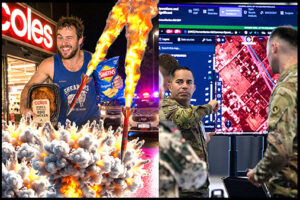
(Man stealing packet of Smiths Chips and a Barbie Chook from Coles In Bundabagerg)
Coles Supermarkets has partnered with the US data analytics company Palantir. What made the announcement controversial is Palantir’s background. The company was originally funded with backing from the CIA’s venture arm and became known for work with intelligence agencies, defence departments, immigration enforcement, and military organisations. Palantir simplifies and streamlines drone strikes and military targeting by using Artificial Intelligence (AI) to automate data fusion, target identification, and strike planning.
Facial monitoring and intrusive surveillance are already commonplace, but opponents want to know where shopper data will be stored and analysed. Critics see it as another step toward highly monitored “algorithm-managed” supermarkets.
On a positive note, advancing AI-driven surveillance technology may be the tool needed to combat the increase in local burglary and crime in the region.
Lookout shoplifters – there’s a new sheriff in town!
Chitchat Newspaper. June 2026.