
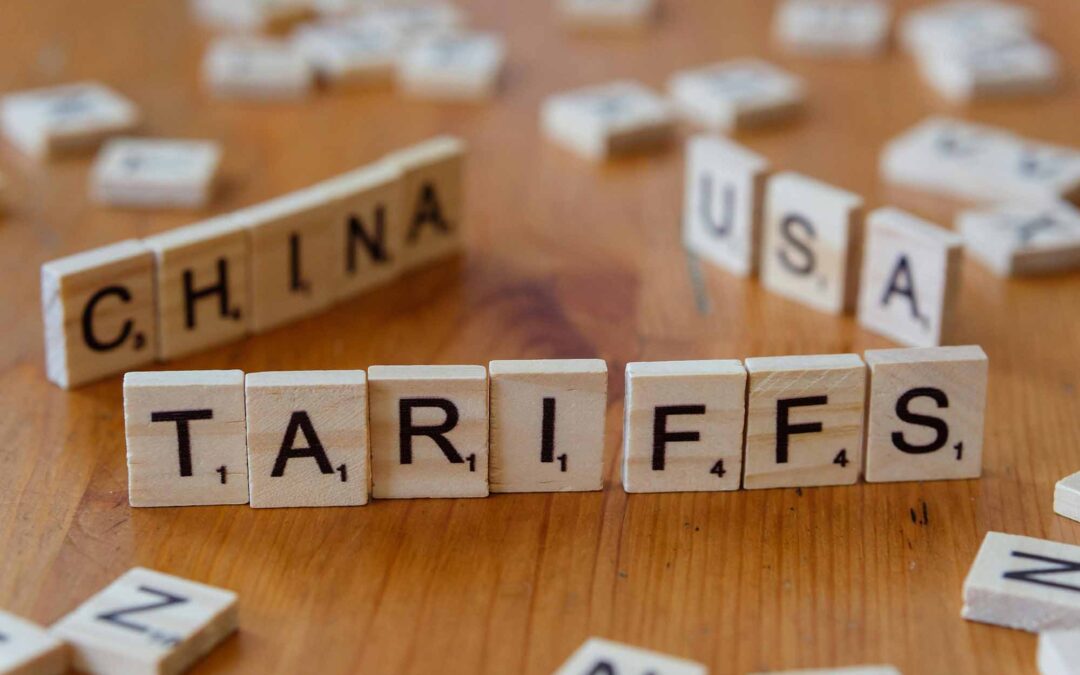
Global markets recently took a hit after U.S. President Donald Trump announced a new set of tariffs aimed at changing the way international trade works. The Dow Jones dropped 349 points, bond yields jumped, and Wall Street went through its third straight day of turbulence — all sparked by what’s now being called the “Liberation Day” tariffs.
Although Trump framed the move as a way to protect American industries, the result was confusion. Talk of a “90-day pause” was quickly shut down by Trump himself. China responded with a 34% tariff on U.S. goods, and investors were left anxious and unsure.
At first glance, this may seem like just an American issue — but it has consequences for Australia too.
Why Australians Should Pay Attention
Australia relies heavily on international trade. We might not be directly involved in the U.S.–China dispute, but when the world’s two biggest economies start raising tariffs, it disrupts global supply chains — and that affects us all.
The first impact is financial.
Superannuation funds with U.S. investments are already feeling the effects. But the bigger concern is a shift toward protectionism (countries prioritising their own economies). If that spreads, Australia could find itself stuck in a more divided and politically driven trading environment.
What’s Behind the U.S. Tariff Strategy?
The U.S. government says it just wants “fair trade.” For example, it claimed that Vietnam has a $124 billion trade surplus with the U.S., and used that figure to justify a 46% tariff.
But economists have flagged two major problems:
1. A trade deficit isn’t the same as a tariff.
2. The U.S. based its numbers on retail prices, not actual import prices — a huge error.
It’s like saying a burger costs $30 because that’s what you paid at a stadium, instead of the $7.50 it actually costs at the supermarket.
What Economics Teaches Us About Tariffs
Economist Henry Hazlitt once warned that tariffs may protect some industries, but they ultimately hurt consumers by increasing prices. They also interfere with the natural give-and-take of trade, which is based on mutual benefit — not keeping score.
Hazlitt flipped the usual view of trade. He argued that exports are the cost (what we give up), and imports are the reward (what we get). For Australians, that means we export iron ore and wine not for pride, but so we can buy cars, computers, and technology we don’t make ourselves.
A Bigger Goal: Controlling the Global Economy
There’s more to this story than just tariffs. Trump’s administration seems to be aiming for a bigger shift: reinforcing the dominance of the U.S. dollar around the world — especially through digital currencies.
In countries with high inflation (like Argentina or Turkey), people are turning to digital versions of the U.S. dollar, such as stablecoins like Tether, to protect their savings. With over $233 billion of these digital dollars now in use, the U.S. sees a chance to lead the digital financial world — and Trump wants to accelerate that.
What This Means for Australia
Australia has always supported free and open trade. But as more countries (including the U.S.) start protecting their own industries, our government faces a tough task: how to stay connected to global markets without getting caught in political crossfire.
If the U.S. and China continue their trade fight, smaller countries like Australia could be pressured to pick sides. That could hurt key industries like farming, mining, and education.
Bottom line: Economic decisions made in Washington can hit home here in Australia. Whether it’s stock market swings, rising import prices, or changes in the digital economy — what happens in the U.S. rarely stays in the U.S.
Written by John E Middleclass
May 2025