
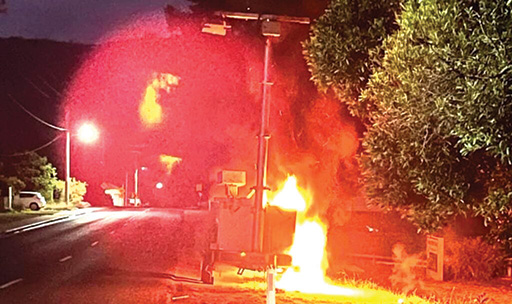
Two Acts of Destruction
A stolen car sits abandoned on a quiet, dead-end street. The window’s smashed and the contents scattered. Within minutes, the news spreads online, and the reactions are predictable: outrage, anger, and calls for tougher policing. Neighbours talk about installing cameras. Someone mentions hiring private security.
The message is loud and clear—this is wrong, it’s recklessly destructive, and everyone agrees.
A few kilometres away, another scene is shared online. A speed enforcement camera has burned out overnight. Photos circulate on social media, but the reactions differ. Alongside condemnation, commentators praised the act, calling the offenders “heroes” and commenting, “not all heroes wear capes”.
The same underlying behaviour of property destruction has produced two very different moral worlds.
Private Harm: A Clear Victim
When private property is targeted, the harm is immediate and personal. A stolen car belongs to an identifiable person. A broken shopfront belongs to a business owner trying to make a living. The damage is visible, and so is the suffering.
Private property theft and destruction elicit near-universal condemnation. Even those critical of policing or government policy tend to agree on this point: harming individuals who are simply trying to live their lives crosses a moral and ethical line.
Public Property: A System Without a Face
When public revenue-raising infrastructure is destroyed—speed cameras, mobile enforcement units, or monitoring equipment—the emotional response becomes fragmented.
The “victim” is no longer a person, but a system, and perceptions vary according to how one judges such a system:
• Local councils
• State agencies
• Tax-funded infrastructure
The destruction is real, but it is distant. It is spread across budgets, absorbed into replacement costs, and ultimately distributed across taxpayers.
This is where judgment shifts. Without a visible individual suffering, some people struggle to empathise.
When Enforcement Loses Legitimacy
In many communities, enforcement tools are controversial. Speed cameras are often viewed not as safety devices, but as instruments of punishment or revenue collection. Similar debates occur around environmental enforcement systems such as London’s Ultra Low Emission Zone policies.
When enforcement is seen as moral, legitimate, and welcomed by the collective community:
• Destroying enforcement tools is treated as criminal vandalism.
When enforcement is seen as immoral, excessive, or unfair:
• Destroying enforcement tools has been reframed as resistance
This is how groups like the Blade Runners in the UK—who saw down ULEZ cameras and post online—can be described by supporters in near-mythical terms, despite facing serious legal penalties. The same act of destruction becomes either criminal or symbolic depending on who is telling the story.
Australians don’t seem to gravitate towards destruction when enforcement is judged as immoral, but often participate in quieter forms of resistance.
Navigation tools like Waze allow drivers to report speed cameras in real time, creating a shared network of avoidance. Drivers slow down briefly when alerted, then resume normal speed once past enforcement points—a pattern sometimes described as “kangaroo driving.”
This behaviour does not mean people reject road safety outright. Instead, it suggests something more complicated: compliance is often conditional, shaped by visibility and enforcement rather than internal agreement. People are not always refusing the rule. They often refuse the method. This tension has led to competing ideas about how road safety should be achieved. One approach relies on monitoring and penalties.
Another, more libertarian in tone, argues that safety should emerge from design, incentives, and personal accountability rather than constant surveillance.
Alternatives include:
• Road designs that naturally slow traffic through geometry
• Insurance-based systems that refuse insurance to immoral and unethical drivers
• Education campaigns focused on real-world consequences
• Stronger training and hazard awareness for new drivers
• Transparent crash data to guide voluntary behaviour
These approaches share a common principle: reduce reliance on enforcement by embedding safety into choice, environment, and consequence.
Chitchat Newspaper – May 2026