

News you may have missed, because if you blink, you may miss it.
BEN ROBERTS-SMITH
The case of Ben Roberts-Smith has drawn attention to ongoing concerns about the National Security Information (NSI) Act, particularly the balance between secrecy and fair trial rights.
Critics, including The Guardian, warn it can lead to “secret trial” risks where evidence is withheld from the public, media, or even the defence, while legal experts note issues such as restricted access to evidence, limited lawyer communication, and delays from security vetting.
Human rights and legal bodies, including Griffith University and the Law Council of Australia, argue it undermines open justice, with cases like Witness J highlighting how proceedings can occur entirely in secrecy.
Advocacy groups such as the Human Rights Law Centre also say it expands executive power and discourages whistleblowing, raising broader concerns about transparency and accountability.
HALF OF AUSTRALIA’S OIL REFINERIES BURNED DOWN
A major fire at the Viva Energy Refinery in Geelong on 15 April 2026 effectively placed half of Australia’s oil refining capacity at risk, as the country operates only two refineries.
The blaze, caused by a mechanical failure, disrupted petrol production and forced reduced output across key fuels.
Prime Minister Anthony Albanese confirmed diesel and aviation fuel continued at 80% capacity, while petrol dropped to about 60%. Although no injuries occurred, the incident highlighted Australia’s vulnerability, with imports expected to offset shortages during recovery.
OIL CHOKE POINTS
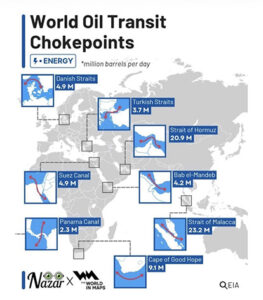
For those who want to know the key global choke points of the oil transportation industry, please refer to the map below.
CENSUS
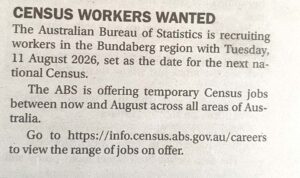
A call for Census workers, went out in the Bundaberg Today for the August 2026 Census.
Historically
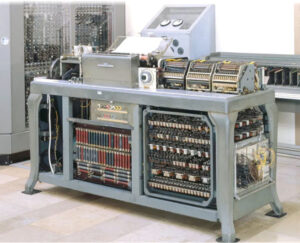
Dehomag, a German subsidiary of IBM, supplied punched-card tabulating machines to the Nazi regime, notably for the 1933 and 1939 censuses. These systems enabled rapid data processing, helping authorities identify individuals by religion, ancestry, language, disabilities, and occupation.
Census questionnaires included highly intrusive questions allowing officials to classify populations and exterminate undesirables with bureaucratic efficiency. A number 6 punched into column 34 labelled “special treatment” was code for scheduled execution.
While not the sole cause, Dehomag’s technology significantly amplified the regime’s capacity for surveillance, discrimination, and ultimately persecution during the Holocaust.
ASIO
Australia is quietly locking in extraordinary powers—and most people have no idea. The Australian Security Intelligence Organisation Amendment Bill (No. 2) 2025 would make ASIO’s compulsory questioning regime permanent, removing its sunset clause and turning what were meant to be temporary measures into lasting law.
Under these powers, people—including those never charged with a crime—can be forced into hours of interrogation. Even children as young as 14 are not exempt. Refuse to answer, or provide false information, and you could face up to five years in prison.
The bill also broadens the scope beyond terrorism to include sabotage, communal violence, and other national security threats. Historically, such laws have allowed detention for up to a week.
No charge. Broader scope. Permanent powers. Critics warn this is no longer an emergency tool—it’s becoming the new normal.
Chitchat Newspaper – May 2026