
Bundaberg and Childers – earthquakes, tsunamis and volcanic fears.
While the world has been recently shaken with earthquakes, tsunamis and volcanic fears, here in the Bundaberg and Childers region, things usually remain as steady as a cane toad on a country road.
Late last month, a massive magnitude 8.8 earthquake rocked Russia’s Kamchatka Peninsula, sparking a tsunami that lashed coastal towns with five-metre waves and reportedly damaged one of the country’s most sensitive military assets — the Rybachiy nuclear submarine base. Satellite images revealed twisted piers and serious infrastructure damage, though fortunately, no nuclear subs appeared compromised. The event triggered tsunami warnings across the Pacific, from Japan to Hawaii and even parts of northern Australia.
With scenes like that making global headlines, it’s no wonder some locals might be wondering: “Could that happen here?”
Let’s take a moment to gather our composure – and explore our region, underground.
Bundaberg: Sitting Pretty in the Middle of the Map
Here’s the good news: Australia is geologically stable, and in this case, much like a good spouse, stable is beautiful. According to tectonic plate theory, the continent of Australia sits smack in the middle of the Indo-Australian Plate — far from the boundary zones where the real fireworks happen. Those edge zones, like the Pacific Ring of Fire, are where plates collide or slip, releasing massive energy in the form of quakes, tsunamis, and volcanic eruptions. Think Japan, Indonesia, Chile — not Childers.
So while nations on plate boundaries live with frequent tremors, Bundaberg’s ground is some of the most stable on Earth. Even the recent surprise — a magnitude 5.6 earthquake near Kilkivan at 9:50am on the 16th of August, felt from Brisbane to the Sunshine Coast — is considered large for Australia, yet still tiny compared to Russia’s 8.8 monster. For context, each whole number increase on the magnitude scale releases about 32 times more energy, meaning Russia’s quake was over 1,000 times more powerful.
Rare, Not Impossible
Earthquakes above magnitude five happen only once every one to two years somewhere in Australia. In our patch, they’re even rarer. Bundaberg hasn’t recorded a single local quake in the last 12 months — not even a stammer of a tremor. The closest recent blip was a 2.5-magnitude quake 92km inland back in June, barely enough to rattle a coffee cup in Eidsvold. We’ve had a handful of magnitude 4 and 5 events in the past decade, mostly offshore or in our mountainous interior around Gayndah and Kingaroy. None have matched the sustained shaking seen in Russia or in quake-prone countries along the Pacific Ring of Fire.
What About Tsunamis?
Tsunamis usually come from undersea earthquakes or volcanic eruptions — but again, our geography has us covered. Literally. The Great Barrier Reef acts like a massive natural seawall, absorbing and dispersing oceanic energy before it ever reaches Queensland’s sandy shores. By the time any tsunami wave made it through that coral maze, it would be a shadow of its former self. Experts from Geoscience Australia have long maintained that coastal towns like Bundaberg are at very low tsunami risk. No reef system on Earth provides as much natural protection as ours.
But What About the Volcanoes?
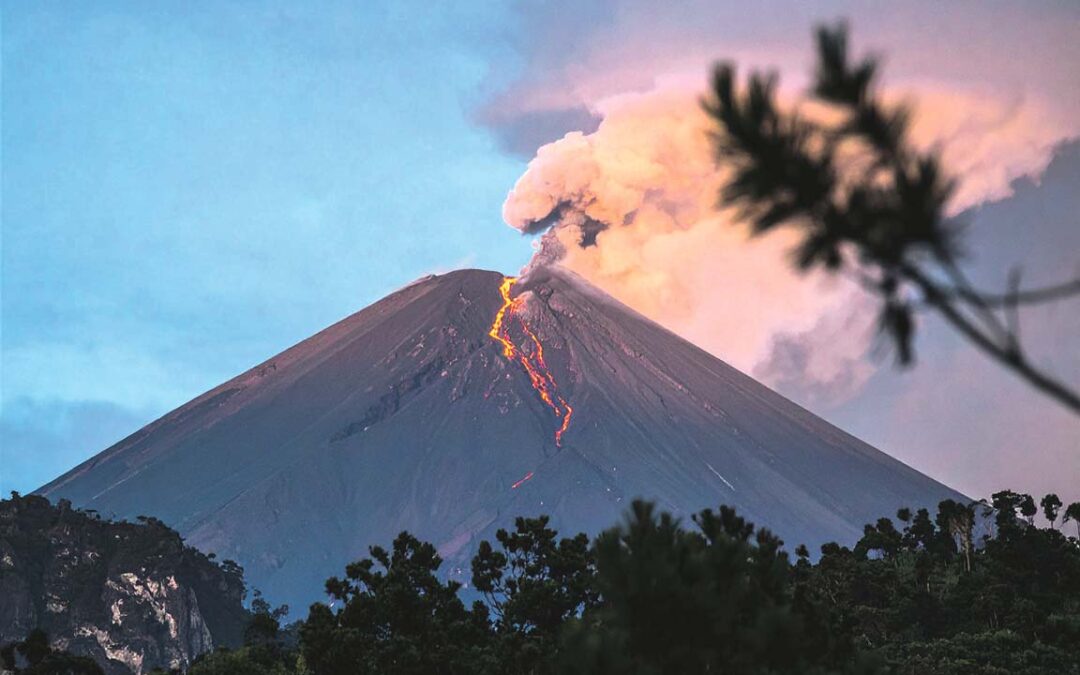
Bundaberg’s rich, red volcanic soils are a blessing from eruptions that happened many years ago. Those ancient volcanoes have long since gone cold — there’s no active volcanic system anywhere near Bundy. The closest you’ll get is if you bite into a boiling hot meat pie while admiring the view up top of the Hummock. So while our soil comes from fire, our future is grounded in calm.
Global Chaos, Local Calm
From Russia’s nuclear-base-rattling 8.8, to New Zealand’s weekly tremors, to the rare Sunshine Coast shake-up, the recent rattles are a reminder that the Earth never stops moving. But Bundaberg and Childers? We remain built on old volcanoes, wrapped in a coral shield, and sitting safely in the eye of the tectonic storm. Recent tremors are a wake-up call, not a warning shot. And compared to Russia’s upheaval, we’re still living in one of the most peaceful geological neighbourhoods on the planet.
QUICK FACTS:
• Russia (late last month): 8.8 magnitude, Kamchatka Peninsula — tsunami damage to submarine base.
• Sunshine Coast: 5.6 magnitude, 2km depth, near Kilkivan — felt from Brisbane to the Sunshine Coast.
• Last local quake: June 2025, 92km west of Bundaberg, mag. 2.5 (barely a burp).
• Biggest regional quakes in past decade: multiple 4–5 magnitude events at Rainbow Beach, Gayndah, Kingaroy.
Chitchat Newspaper. September 2025.