
Rawness Vs Replication
Musical Journalist Ben Vee recently published an article that hit very close to home. He wrote about how AI is coming for the blues.
As a blues guitarist myself, I always assumed that the blues was going to be safe. There have been challengers before. Synthetic music in the ’80s – that was no match. Computer-modulated amps? Forget about it. The blues are uniquely human. AI can’t create feelings…. Can it?
Ben Vee was genuinely alarmed. In his words, AI blues bots are here, and they are deceptive. First, the bots came for academia and literature. Then they invaded graphic art, producing endless images from text prompts. Now, he argues, they’ve come for the blues.
The process is unsettlingly simple. AI systems are trained on the voices, lyrics, and music of virtually every blues recording available digitally. Someone sitting in a basement can type: “Slow tempo blues, key of C, voice of a Black female, song about lost love.” Seconds later—voilà—a song appears. The “inputter” takes credit as composer and lyricist. Some of it is passable. Ben calls it “elevator bot blues.” It’s fake, and it’s racking up thousands of likes and streams on YouTube and Spotify.
Go look up the artist “Etta Mae Hartwell”—She does not exist. The voice is computer-generated. The persona is fictional. Yet the music is presented as authentic, and most listeners would never know the difference.
I searched for Etta Mae on YouTube. I was intrigued—and then appalled. It sounded close. Eerily close. But the guitar gives it away. Recycled blues clichés. Sterile, clinical solos. A faint digital decay that no tube amp ever produced. The lyrics are worse—insipid, hollow, endlessly recycling familiar tropes. They’re so busy trying to act bluesy that they miss the point entirely.
That’s because the blues have something AI can’t copy: Rawness. Mistakes. Grit.
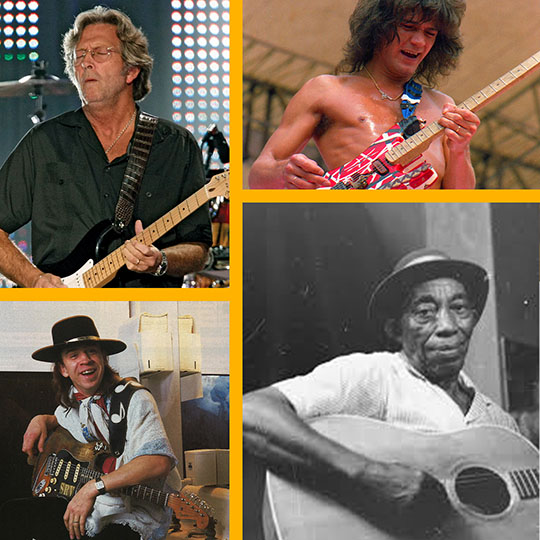
Think of Mississippi John Hurt, and his gentle openness about life in the South. Think of Hendrix, whose blues playing was unpredictable, almost chaotic. Consider Stevie Ray Vaughan, whose bends weren’t just notes; they were declarations. Eddie Van Halen once said Eric Clapton was the greatest blues guitarist—so great that Eddie memorized every riff Clapton ever recorded. But Eddie didn’t stop there. He absorbed it, reshaped it, and turned it into something entirely new.
That’s the difference.
Humans imitate and transform. AI imitates and imitates. It becomes stuck.
The blues aren’t about technical accuracy. They’re about touch, timing, and knowing when not to play. They’re about responding—to the room, to the band, to your own history. AI can approximate the sound of the blues, but it can’t live out the blues.
AI may come close. Uncomfortably close. But I’m still holding on to hope that the blues belong to humans—that some things remain lived, not generated. As long as a bent note can mean something different every time it’s played, the blues will never fully surrender to a machine.
And I don’t think they ever will.
Slim Pickins – Musical journalist.
Chitchat Newspaper. Februar 2026.