
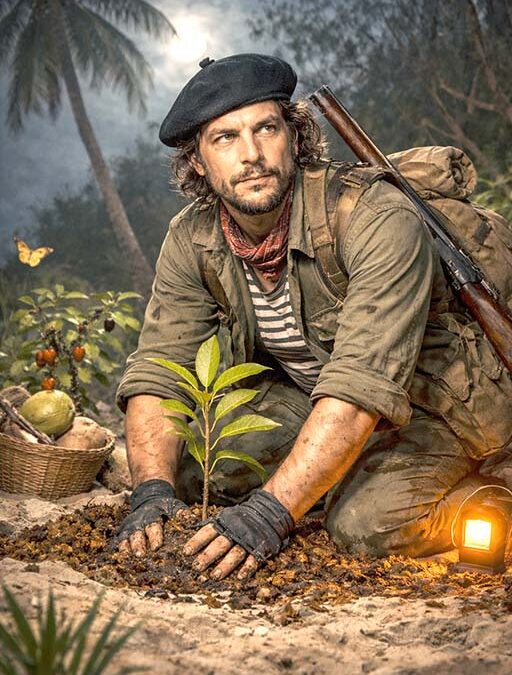
By the time you notice, it may already be too late: the soil is healthier, the bees have moved in, and something edible is quietly thriving where yesterday there was nothing but sand and bureaucracy.
For the uninitiated, guerrilla gardening is the art of planting in public spaces without permission. It started in 1970s London, when rebels tired of grey, lifeless streets began secretly sowing flowers and vegetables in forgotten lots.
Since then, it’s quietly gone global — turning urban spaces into rogue food forests. Think activism disguised as photosynthesis.
Here locally, the local guerrilla gardener (or network, or highly organised cult — it’s impossible to tell) is operating with ruthless generosity. Witnesses report saplings appearing overnight, seeds scattering, and mulch applied with shocking flair.
Native trees take root confidently. Native flowering plants appear. And then there’s the edible bounty: pawpaw, jackfruit, mulberries, coconuts — all politely low-maintenance, community-minded, and absolutely unwilling to become a biological pest.
Authorities are baffled. No slogans. No plaques. No social media campaign.
Just thriving plants, slightly smug about their own survival. Those in the know benefit quietly: fruit for afternoon snacks, shade for hot days, and habitat for every pollinator that happens to be passing through.
Signs of guerrilla activity include:
– suspiciously fertile soil
– plants that make you smile
– butterflies acting like they’ve hit the jackpot
The revolution will not be televised.
It will be mulched, flowered, and possibly delicious.
Chitchat Newspaper. February 2026.