
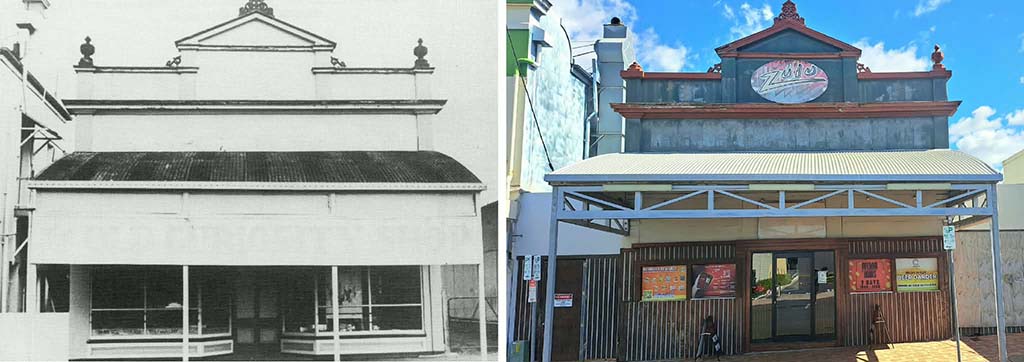
The Zulu Lounge and the Cost of Collectivism
Heated debate has emerged in Bundaberg over the proposed demolition of the Zulu Gaming Lounge, also known as the Old Curiosity Shop. Community heritage groups have strongly opposed the decision, arguing that the building’s façade dates back to the late 1800s and should be preserved. Many are hoping the council will use force to achieve their desires.
While the pursuit to protect history is understandable, this controversy highlights a deeper issue: the growing conflict between private property rights and collectivist decision-making in Australia.
Australia has never openly claimed to be a communist society. It was built and flourished under a semi-free-market capitalist system where individuals were able to own property, invest, take risks, and pursue profit. Yet heritage listing increasingly reflects a mindset where the wider community believes it has the right to dictate how privately owned property should be used, even when the owner bears the cost.
Are those willing to place demands on the property of others also willing to fund to the upkeep?
I share the frustration many feel when beautiful old buildings are demolished and replaced with dull, modern developments, especially a car park.
Across Australia, unique architecture is disappearing, often replaced with lifeless, uninspiring structures. However, this outcome is not caused by developers alone. Rising material costs, labour shortages, inflation, and ever-increasing regulatory demands make it harder than ever to restore or maintain heritage buildings.
In many cases, developers simply cannot afford to preserve heritage-worthy structures under the conditions imposed. There have been cases where buildings earmarked for possible future heritage classification have been demolished, solely to prevent burdensome rules being imposed on the owners at a later date. It is ironic to think that those using the apparatus of the state to get their wishes are inadvertently destroying what they set out to save.
It is also worth remembering how these historic buildings came to exist in the first place. They were not built through government or community committees or enforced heritage controls. They were built by individuals and businesses during times of economic prosperity, using private capital earned through hard work, entrepreneurship, and opportunity.
Many were constructed during periods of stable money and booming industries, such as the gold rush. Capitalism created the wealth that erected such visually appealing structures. Communism could be the mechanism that brings them to the ground.
Heritage advocates often argue from sentiment, but sentiment does not equal ownership. Wanting to preserve a building does not grant the right to force a private owner to do so. This is why the government is called upon to use force, for the supposed collective good.
When the government is used to enforce preservation against an owner’s wishes, it steals power away from individuals and unjustly doles it out to the collective, who neither built it nor maintained it— a principle far more aligned with socialist and communist systems than a free-market one. This speeds the destruction of wealth creation in the present and actually works against the very things preservationists are trying to achieve.
Perhaps grand structures like the ones so often sought out for preservation could be constructed again today, if the environment were right for wealth to flourish.
Ideally, heritage preservation should be encouraged through incentives, private investment, or voluntary agreements, not government coercion. I would love to see historic buildings restored and celebrated for future generations. But I draw the line at using state power to impose those preferences on others. If you don’t like what people or businesses are doing in your town, a more capitalist approach would be to boycott it. This would send a stronger community message to those both now and in the future. No one says you have to spend your money there, and if enough people feel the same, it could send an even stronger message to developers in the future.
If Australia values the system that allowed it to prosper, it must also respect the property rights that underpin it.
Written by John E Middleclass

Chitchat Newspaper. February 2026.