
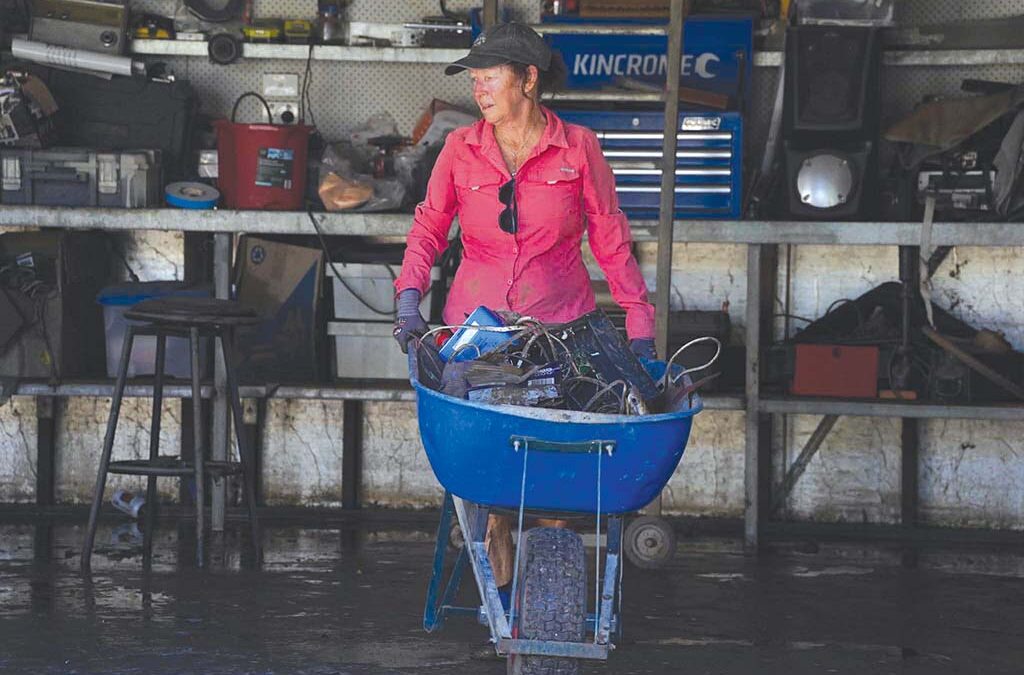
As floodwaters surged across the Bundaberg region, they left behind more than mud, debris, and damage. They revealed something deeper — the character of a community under pressure. In times like these, the best and worst of human behaviour often emerge side by side.
The Good
If there is one thing the recent floods have proven, it is that Bundaberg knows how to look after its own. Community groups, businesses, churches, volunteers, and everyday residents rallied quickly to support those affected.
The Angel’s Community Group, coordinated through its Facebook page, became a hub of activity as people offered assistance, supplies, and equipment. A remarkable list of local businesses donated time, machinery, transport, storage, and manpower, often at significant cost to themselves.
Lindsay Transport assisted with logistics, while Cooltech Refrigeration & Air Conditioning Bundaberg and 467 Electrical provided technical help.
Stuart and Sons supplied a forklift, and Terry from Craft Hire organised shipping containers so flood-affected families could store salvaged belongings safely.
Lifeline mobilised teams of volunteers and trucks, and Alive Church opened its doors as a secure storage site while also providing forklifts and practical support.
Removal companies including Bundy Removals, Buddy’s Removals, and Bargara Removals stepped in to help move furniture and household goods out of danger or into temporary accommodation.
Local trades and service providers such as Canelanders Auto Service Centre, Hallston Construction, Murrell’s Bundaberg Crane & Truck Hire, Wide Bay Tree Services, Cruz Bakery, MMM Bundaberg, Hitz FM 93.9, and Officeworks all contributed in various ways.
Behind these names were hundreds of unnamed volunteers, neighbours, friends, and complete strangers — who turned up with utes, trailers, cleaning gear, and strong backs.
Social media feeds filled with offers of assistance, spare rooms, meals, and supplies. Conversations over fences strengthened communities and helped make the for clean-up bearable.
Restaurants and pubs played a selfless role. For people without power or running water, a hot shower, a phone charging point, and a safe place to sit could make an enormous difference.
The South Kolan Hotel Motel was among those offering support to flood-affected residents needing a place to regroup.
Then came the “Mud Army” — volunteers headed up by Alive Church in association with the local government armed with shovels, buckets, practicality, and determination.
Once water subsides they provide the equipment, supplies, and support needed for volunteers to clean homes, assist vulnerable residents, and help people begin the journey of rebuilding.
Technology also played a part. OzDrones offered free assistance to deliver medication and food to people trapped in isolated areas, flying essential supplies into places vehicles could not reach.
Acts of kindness extended to animals as well. Leonard’s Chicken at Hinkler donated three trolley-loads of unsold meat to Red Collar Rescue, ensuring displaced animals would be fed during the crisis.
Emergency services were at the heart of the response. SES crews, firefighters, police officers, paramedics, and countless volunteers worked long shifts in dangerous conditions to rescue residents, manage evacuations, and secure flooded areas. Many did so while worrying about their own homes and families.
Of course, no article can capture every act of generosity. Bundaberg is full of quiet heroes who never seek recognition. But their actions speak loudly about what makes this region special.
The Bad
Despite the inspiring stories, the scale of the flood’s impact cannot be ignored.
At the Targo Street gauge, the Burnett River peaked at around 7.4 metres — a level that brought significant inundation to low-lying areas. For many residents, comparisons with previous floods only deepened anxiety as water crept closer to homes and businesses.
Property damage has been extensive. Houses have been flooded, insurance will go through the roof, shops closed, equipment destroyed, and livelihoods disrupted. Along the coast and riverbanks, boats broke free from moorings, with many vessels damaged, some even ending up in the middle of farmland.
Transport disruptions created additional challenges. Road closures isolated communities, delayed emergency responses, and prevented deliveries. Supermarket shelves emptied quickly as panic took hold and supply trucks struggled to reach stores.
At Woolworths Kepnock, many aisles were reportedly stripped bare, highlighting how fragile supply chains can be during disasters.
Fuel availability became another concern. At Burrum Heads, petrol prices reportedly jumped from $1.95 per litre to $2.19 overnight, adding stress for residents already facing evacuation or long detours due to flooded roads.
Schools across the region were forced to close, disrupting education and childcare arrangements for families already dealing with uncertainty. I’m sure the students were devastated.
Most heartbreaking of all were the loss of lives linked to the event. A 26-year-old man and a 23-year-old woman on temporary visas from China, travelling from Brisbane toward the North Burnett region, failed to reach their destination. Their vehicle, a silver Subaru Forester, became caught in flood conditions. News of their deaths sent shockwaves through the community. Our heartfelt prayers and thoughts go out to the families and friends back home.
The Ugly
Disasters sometimes bring out behaviour that shocks and saddens a community.
Animal welfare groups reported disturbing incidents, including puppies allegedly abandoned on riverbanks during the flooding. Such actions place already vulnerable animals in extreme danger and add to the burden on rescue organisations working at full capacity.
Crime also became a concern. Some residents reported opportunistic thefts and break-ins while homes were unattended or damaged. Bikes were stolen around Bundaberg and thieves used the cover of the rain to raid properties. In one case, thieves broke in to a property and sheds causing reckless damage and stole a ride-on mower and trailer from an isolated farm in the Childers region.
Misinformation spread online as well. Artificial intelligence-generated images depicting the Bundaberg bridge collapsing circulated widely on social media. While some may have viewed them as humour, many residents found them distressing and insensitive during an already traumatic time.
Bundaberg Regional Council has also drawn sharp criticism for advertising its intention to auction local properties where owners have fallen behind on rate payments. In some cases, the outstanding “debt” is reported to be around $12,000 — a figure that may represent only a small fraction, roughly two per cent, of the property’s overall value.
Many residents feel that taking such unnecessary action during a time of widespread hardship shows poor judgement and a clear disconnect from those they say they “serve”. The punishment appears disproportionate to the size of the debt.
While the council may have the legal privilege to proceed with the forced sale, critics argue that this is poor form and out of character with the community they are supposed to “represent”. Compassion should guide decisions during a disaster. It’s not too late for Council to halt these auctions and join the rest of the community who are busy helping their neighbours.
A Community Tested
Floods test more than infrastructure, they test patience, resilience, and social cohesion. They expose vulnerabilities but also strengths.
In Bundaberg’s case, the overwhelming story remains one of community spirit. For every act of selfishness or wrongdoing, there were dozens of acts of generosity, bravery and selflessness. For every theft or insensitive land grab, there were neighbours quietly helping neighbours.
Recovery will take a long time. Homes must be repaired, businesses rebuilt, and finances restored. But history suggests Bundaberg will endure, just as it has after previous disasters.
The Chitchat Newspaper offers our sincere condolences to everyone who has experienced loss and grief during the floods. We know some of our readers will not have insurance, will be struggling with debt, loss of income, and relationship strains.
Please feel free to reach out to the Mud Army, Alive Church, and Global Care who have a track record helping the Bundaberg community at times like this.
Leading up to Easter many local churches throughout the region have contacted the Chitchat and urged locals to come and attend. We have been assured that fancy Sunday clothes are not needed and the roof won’t cave in on visitors.
Chitchat Newspaper. April 2026.