
Inside Bamboo Land – Australia’s Most Immersive Tropical Gardens
The Chitchat Newspaper recently caught up with Janne Nilsson to talk tropical gardens, business growth, and how the once-exotic bamboo plant helped build a thriving family business and one of Australia’s best tropical garden destinations.
We take bamboo for granted nowadays. Many farms throughout the region use bamboo as windbreaks, prized for its rapid growth, strength, and reliability. But when Bamboo Land began in the early 1990s, bamboo was still a novelty. Many readers may not know that Australia has a few native bamboos, but most have been imported into Australia by dedicated collectors. Bamboo Land’s founder, Klas, was one such pioneer.
People often refer to Klas as “the original bamboo man.” What was it about those first few bamboo plants that hooked you all so completely?
Clumping bamboo in the early 1990s was still a novelty in Australia, with only a handful of collectors and enthusiasts introducing species during the 1980s and early ’90s. It didn’t take my father long to recognise bamboo’s unique value, combining beauty and usefulness in a way no other plant could: fast-growing yet graceful, exotic yet highly practical.
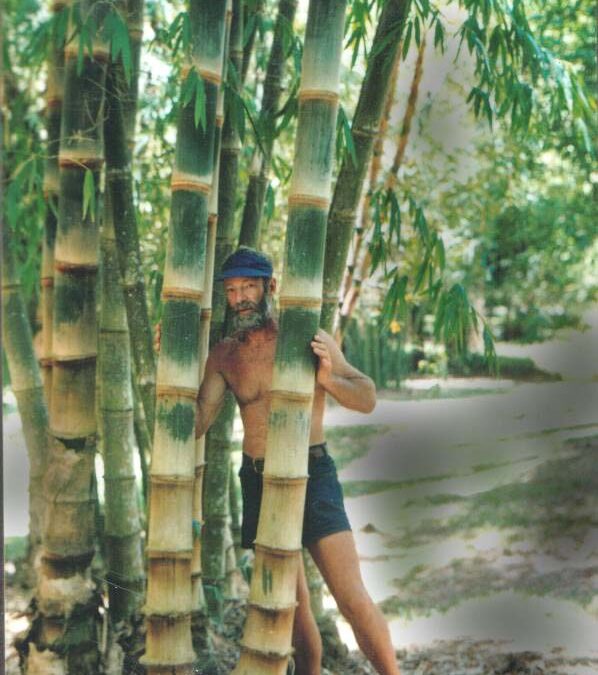
After just a few years growing a small selection of clumping species, Klas set out to unite the various bamboo species scattered across the country by various collectors onto the one property. That property is Bamboo Land. Bamboo’s ability to spark curiosity and imagination was immediate, and before long the general public began visiting to experience the magic of these fast-growing, majestic, towering clumps thriving in our Queensland climate.
You now have more than 100 different clumping bamboo species growing in Torbanlea, how did you work out which species would be worth growing here in the Fraser Coast region?
As with any emerging plant trend, the early years are driven by collectors and enthusiasts – those who want one of everything and are always chasing the rarest and most unusual forms. That was very much the case for bamboo through the 1990s and early 2000s, when we grew a very wide range of species in small batches. As time has passed, the bamboo market has matured and shifted away from a collector focus into the mainstream, where reliability matters more than rarity.
Today it’s about proven performers: species that are drought-tolerant, cold-hardy, tidy in habit, tightly clumping, and capable of producing straight, high-quality timber. This natural evolution has seen Bamboo Land refine its range from around 150 species to about 60, but instead of producing small numbers, we now grow these best-performing bamboos by the thousands.
Many gardeners are still cautious about running bamboo, how do you help people choose varieties that are well-behaved and suited to their space?
We spend a lot of time asking questions before recommending bamboo, because it’s very much in everyone’s long-term interest that the right species ends up in the right place. In some cases, that even means talking people out of buying bamboo altogether. When chosen carefully, bamboo is an outstanding plant – but it needs adequate space and proper maintenance to perform at its best.
Most negative experiences stem from running, invasive bamboo, or from large clumping varieties planted where they simply don’t belong. That’s why education is central to what we do. By clearly explaining growth habits, mature size, and ongoing care, we help gardeners choose well-behaved, clumping bamboos that suit their space and remain a positive, long-term addition to the garden.
The display gardens are a great way to educate the public. They are also such a refreshing and fun experience. It feels like being instantly transported to a tropical Balinese holiday — why is it important for you to let people experience the gardens before they buy?
Bamboo grows incredibly fast – some of the larger species can reach up to 30 metres tall within five or six years of planting – and that speed means things can go wrong just as quickly if the wrong bamboo is planted in the wrong place. It’s vital that people truly understand the size and scale of these plants, and there’s no better way to do that than by experiencing them in the ground. A height figure on a plant label or website is easy to overlook, but standing beside a 30-metre-tall clump, especially one that’s only a few years old – really brings it home. Those giant bamboos aren’t suitable for everyone’s backyard, but they’re absolutely spectacular, and the gardens allow people to experience their magic without needing to grow them themselves. At the same time, visitors can see many smaller, well-suited bamboo varieties growing at maturity, along with our increasingly diverse collection of tropical plants, particularly gingers and heliconias, which now play a major role in the Bamboo Land garden experience.
Admiring the magnificent tropical garden you have today, was this always the plan, or did the space slowly evolve into something you didn’t fully expect?
Gardens, whether large or small, are never truly finished. Like the plants within them, they are always growing, changing, and evolving. There was never a single master plan for the gardens at Bamboo Land – instead, what exists today is the result of countless small additions, adjustments, and expansions made consistently over time.
Tropical plants naturally lend themselves to a more relaxed, informal style of gardening, and we’ve embraced that process of evolution. Plants expand, creep, and grow into one another; some naturally decline and disappear, only to be replaced by others – sometimes by their own doing, sometimes with a gentle nudge from us. That ongoing, organic evolution is very much what has shaped the gardens into what visitors experience today.
Bamboo Land has grown into a real family business over the years — what is the secret to a successful handover from one generation to the next?
Tarissa and I took over the reins of Bamboo Land from my father in 2007 – nearly twenty years ago now. What was then a small duo operation and a farm hand has since grown into a team of close to 30 full-time staff. I believe any successful generational handover comes down to mutual trust and respect.
My father trusted me to take the business forward, and I respected the vision, hard work, and foundations he had created. Every business needs both entrepreneurial visionaries and long-term custodians who can refine, expand, and adapt that vision to an evolving marketplace. My father brought the pioneering spirit; I’ve focused on growth and long term infrastructure and development. Together, across generations, we’ve been able to build something truly special.
As the nursery expanded, what were some of the bigger challenges or learning moments along the way?
I think that anyone in business will say that one of the biggest challenges is managing a workforce. Finding the right people, retaining experience, maintaining morale, and ensuring customers receive consistently high-quality advice and service all take ongoing effort. With a team of nearly 30 employees, many of whom have been with Bamboo Land long term, we’ve learned just how vital staff continuity is to the success of a growing business. That shared knowledge, loyalty, and sense of belonging within the Bamboo Land family has been one of our greatest strengths as we’ve expanded.
The new garden centre and café overlooking the Burrum River is something locals are really curious about — what can visitors look forward to when it opens?
Yes, this is the large metal frame that can be seen overlooking the Burrum River, and it’s very much a work in progress. We began the project several years ago, but shortly after, demand for our plants increased dramatically. Rather than stretching ourselves too thin, we made the decision to focus on strengthening the production side of the nursery first.
That meant investing in larger greenhouses, expanded growing areas, work sheds, a dedicated dispatch centre, staff facilities, and workshop spaces. Those upgrades have allowed us to significantly grow our online business, with the majority of our plants now shipped interstate. With production capacity now well established and able to comfortably meet demand, our focus will soon shift back to completing the new retail garden centre and café, which will offer visitors a relaxed destination to enjoy the gardens and river views alongside the Bamboo Land experience.
For readers who are keen to try bamboo, gingers or heliconias at home, what’s your best advice for growing them successfully in our local conditions?
Mulch, mulch, mulch – and regular watering. Most tropical plants are shallow-rooted, so they benefit enormously from heavy mulching to keep the soil cool and moist, paired with consistent watering a couple of times a week when there’s no rain. With our dry winters and springs, the best time to plant bamboo, gingers, and heliconias is summer through early autumn, when natural rainfall helps plants establish strong root systems before cooler, drier conditions set in. In short, now is a great time to plant and give tropicals the best possible start.
Go visit these exotic gardens right on our doorstep.
Wander the gardens, feel the scale of the bamboo, and soak up one of Australia’s most immersive tropical landscapes. Take the kids on an adventure – they may even spot elephants, horses, snakes, or even Bigfoot in the jungle.
While you’re there, say hello to Janne, his wife Tarissa, and the team — they’re always generous with advice, stories, and genuine Fraser Coast hospitality.
Chitchat Newspaper. March 2026.