
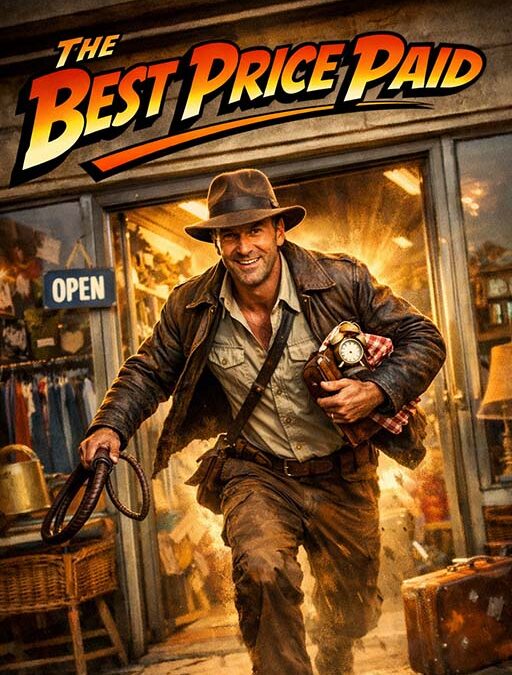
Hunting Treasure In Bundaberg’s Racks
Op shops have always been a bit magical. Like being transported to a Middle Eastern bazaar or a Las Vegas pawn shop. Push open the door, catch the familiar mix of old books and bric-a-brac, clothes racks and fabric softener in the air, and you’re instantly on the hunt. Somewhere between the racks of dresses and one-of-a-kind crockery, sits the possibility of a bargain, a memory, or a treasure you didn’t even know you needed.
Across Bundaberg, Gin Gin, Childers and Bargara, op shops have become more than places to donate last year’s fashions. They are community hubs, recycling centres, charity fundraisers and, for many locals, a favourite pastime. You don’t simply shop in an op shop — you explore.
Let’s clear one thing up early. If you’re expecting to pick up a brand new designer dress or pristine leather shoes for a couple of dollars, you may be disappointed. Those days are mostly gone.
Today’s op shop managers know their labels, fabrics and trends, and they also know what’s fair. Premier items such as labelled dresses, quality boots and designer pieces still carry a respectable price — but they remain far cheaper than buying new, and every dollar raised supports people doing it tough in our own community.
What you can always expect is value. Solid brands, good basics, near new condition and the occasional vintage gem appear daily. It’s a business model that keeps you coming back, because you just don’t know what you could be missing out on when new items are freshly stocked each day. It’s rare to leave empty handed. Often, you walk out with something you never knew you needed until it was right there on the shelf, whispering your name.
Inflation has played a role in the renewed popularity of op shops. With grocery bills rising and household budgets stretched, many families are thinking twice before paying full retail prices. Op shops offer an alternative that doesn’t feel like a compromise. Add to that the growing love of vintage and retro items, and suddenly yesterday’s throwaways are today’s must haves.
Despite this being one of the busiest times of the year, several local op shop managers generously gave up their time to share what really goes on behind the scenes. Vicky from Neighbours Aid, Lyn from the Salvation Army, and Kylie from Lifeline all shared their stories, offering insight and a timely reminder of why these shops matter so much at Christmas.
Salvation Army Family Stores
For the Salvation Army, this time of year is about far more than retail. Lyn explained that stores are incredibly busy delivering Christmas hampers and supporting families across the region. Stock comes from a mix of local donations dropped in store, contributions via the church, items sent from the distribution centre, and collections made by Salvos trucks directly from homes and businesses.
The hardest items to move are often older furniture pieces, particularly bulky TV units from the pre flat screen era and large, heavy items that no longer suit modern homes. Shelves, however, are constantly refreshed. Salvation Army Family Stores receive and place new stock on display daily, meaning there is always something new to discover.
Some items follow set pricing, while others are researched and priced individually. Store managers work within a pricing framework but have flexibility when it comes to one off items.
Donation bins are located at Bargara, Bundaberg City and Childers, with larger items able to be booked for truck collection or home delivery. Lyn also reminded the public that donated items should be in a condition suitable to be sold or gifted, as dumped waste uses valuable resources better spent helping those in need.
Lifeline
Christmas and New Year are particularly demanding periods for Lifeline. Kylie Brogden explained that all stock is donated by the local community through in store drop offs, Lifeline truck pick ups or donations left at shop fronts. Daily restocking is a major job, with items cleaned, priced and placed on the floor as quickly as possible.
Interestingly, it’s not large furniture that proves hardest to sell, but single glasses, stray coffee mugs and lonely punch bowls. Clothing is priced by Lifeline’s team of volunteers using a base price list and adjusted for quality. Kylie also stressed the importance of donating during business hours, as items left outside after hours are often damaged by weather or theft and become unsaleable.
Neighbours Aid
Neighbours Aid is also feeling the Christmas rush. Vicky, who has worked in retail for years and recently stepped into the role of manager after more than a year on staff, said the shop is currently looking for volunteers. Even a couple of hours helping to sort clothes or furniture can make a huge difference.
Like many stores, older style furniture can be difficult to move, but larger donations can be picked up if needed. With prices recently slashed, stock has been moving quickly. Vicky’s message is simple: get in and have a look. She also wished the community a Merry Christmas and a Happy New Year.
Taken together, these stories explain why op shops continue to thrive. They are carefully run, community powered spaces balancing affordability, fairness and purpose.
For some, bargain hunting is an adventure, a crusade of Indiana Jones proportions. For others, it’s just about supporting charities that give back. Either way, op shops across Bundaberg, Gin Gin, Childers and Bargara remain one of the most feel good places to shop.
Get out there and raid the lost clothing rack.
Chitchat Newspaper. January 2026.