
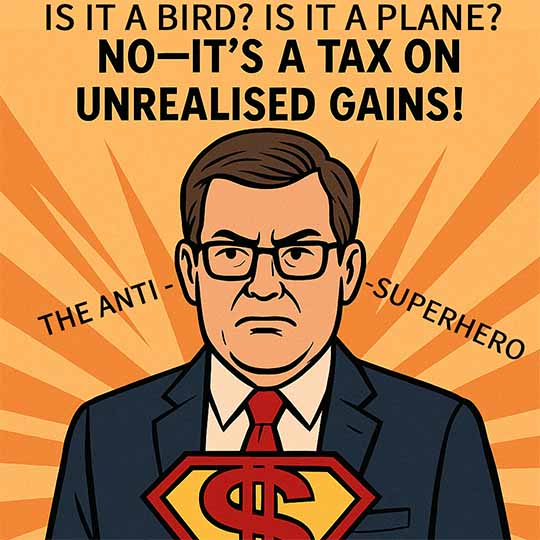
A new federal tax plan could see Australians paying thousands of dollars in tax
—even if they haven’t actually made any money. You can’t make this stuff up…
The proposed law, called Division 296, would bring in an extra 15% tax on superannuation accounts with over $3 million. But here’s the catch: it includes something called “unrealised gains”—meaning people could be taxed on paper profits they haven’t even received yet.
You may be thinking that you’re safe and it’s only a problem for the filthy rich, but let’s not forget about that pesky inflation. Even the average earner could see super accounts rise to meet this threshold by retirement, and the Greens want to lower it to 2 million.
This is causing concern for financial experts, economists, and everyday Australians—especially in rural regions like Childers and Bundaberg, where land values have climbed sharply in recent years.
What Does “Unrealised Gain” Mean?
Let’s say your super fund owns a piece of farmland or property. If that land goes up in value—on paper—you could be taxed, even if you don’t sell it or make any cash from it.
That’s what’s known as an unrealised gain. It’s money you don’t actually have in your hand. Some pencil pusher values your property then expects you to cough up.
Why Are People Worried?
DBA Lawyers, one of Australia’s leading experts in superannuation law, says this change could cause real problems:
• You might owe tax but have no money to pay it. This would cause families to dump assets and disrupt agricultural production.
• It sets a dangerous example for other types of tax in the future. It’s usually the poor and middle class that carry the burden of taxes. What better way to extract money than to tax make-believe unrealised gains. Hey you! How much is your vintage car worth now?
Even worse, the $3 million cap won’t rise with inflation. That means more and more everyday Aussies—including farmers and small business owners—could get caught in the tax net as property and land values grow. Would you put money from the sale of a business in Super if you were heading into retirement?
What Would a Common-Sense Classic Economist Say?
Economist Henry Hazlitt, famous for his book Economics in One Lesson, warned about policies like this. He believed governments should look at the long-term effects of a decision—not just how it looks today.
Hazlitt would say this tax sounds good in theory, but it could lead to:
• Less investment in farms, homes, and businesses.
• Unfair taxes on people who haven’t actually earned any income.
• Bigger government control over your money and property.
In simple terms, Hazlitt would argue: “Don’t tax people on money they don’t have.”
Why It Matters for Bundaberg & Childers
Local farmers and landowners are especially at risk. Many have property in their super funds that’s increased in value over decades—often land passed down through the family. They could soon find themselves over the $3 million line, without being rich or cash-heavy.
Imagine a retired couple getting a surprise $40,000 tax bill because the farm in their super fund might be worth more this year.
What Happens Next?
Division 296 is still just a proposal, but it’s expected to take effect from 1 July 2025. Many financial experts and community leaders are calling on the government to rethink the plan—or at least remove the unrealised gains part of it. Because once the government starts taxing value that only exists on paper, who knows what they’ll tax next? Your thoughts?
Written by John E Middleclass
June 2025