
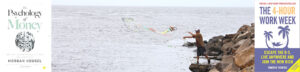
There is an old story about a businessman who was holidaying in a small fishing village in Mexico. One afternoon, he watched a local fisherman pull his small boat onto the shore with a few good fish. The businessman was impressed.
“How long did it take you to catch those?” he asked.
“Not very long,” the fisherman replied.
The businessman was puzzled. Why not stay out longer and catch more? The fisherman explained that he had caught enough to feed his family and make the money he needed.
“So what do you do with the rest of your day?”
The fisherman told him he slept late, fished for a few hours, spent time with his wife and children, and in the evenings met his friends in the village for a drink and a chat.
The businessman immediately saw an opportunity. If the fisherman stayed out longer, he explained, he could catch more fish. With the extra money he could buy a bigger boat. Then another boat. Eventually he could own a fleet. He could employ other fishermen, sell directly to customers, and build his own company.
“And then what?” the fisherman asked.
Then he could move to the city and grow the business even further. Perhaps he could even go public on the stock exchange.
“And then what?”
Eventually, the businessman explained, he could sell the company for millions and retire.
“And then what?”
The businessman smiled. Then he could move to a little fishing village. He could sleep late, fish for a few hours, spend time with his wife and children, and have a drink with his friends in the evening.
Sound familiar?
The fisherman already had the life the businessman was telling him to spend the next 20 years trying to achieve.
Versions of this little story have been around for decades, and it also appears in Tim Ferriss’s The 4-Hour Workweek. But after recently reading Morgan Housel’s The Psychology of Money, I couldn’t help thinking about it again. I think we’ve become a little confused about what it actually means to be rich.
Rich and wealthy are not the same thing
When we think of someone who’s wealthy, what do we picture? A beautiful house. A luxury car or boat. Perhaps expensive designer clothes and overseas holidays. The problem is, none of those things actually show us someone’s wealth. They show us what they have spent.
Author Morgan Housel makes a simple distinction in The Psychology of Money: being rich and being wealthy are two different things. Being rich generally means having a high enough income to afford expensive things or at least make the repayments on them. Wealth, on the other hand, is the money and assets you haven’t yet spent.
And that’s much harder to see.
You can see your neighbour’s new car sitting in the driveway. You can’t see their sick bank balance, mortgage, car loan or credit card statement.
Likewise, you might walk past someone who looks like a bum, driving a 15-year-old Corolla, and never know they own their million-dollar home outright and have hundreds of thousands of dollars invested in real estate, businesses, crypto, and the stock market.
That’s the funny thing about wealth. The easiest part to see is often the part that’s already been spent.
The millionaire problem
Ask someone if they’d like to be a millionaire and most of us would probably say yes. But what do we actually mean? Sometimes what we’re really imagining is spending a million dollars. The house. The car. The holidays. The lifestyle.
Yet spending a million dollars and having a million dollars are two very different things. As Housel points out, every time we convert money into something we can show off, we no longer have the money. We have the thing, and shiny things lose value through depreciation the moment you buy them.
That doesn’t mean we shouldn’t enjoy our money. There isn’t much point in spending your entire life scrimping every cent and refusing to enjoy any of it. But there is a difference between enjoying your money and lifestyle and needing other people to see that you have it.
What does wealth actually buy?
This is where The Psychology of Money gets particularly interesting. Housel argues that one of the greatest things money can buy isn’t a bigger house or a nicer car. It’s control over your time.
A little bit of savings might mean being able to take a week off when you’re sick without worrying about paying the electricity bill. More savings might mean being able to leave a job you hate and wait for a better one. Having six months of expenses tucked away might mean losing your job is still frightening—but it isn’t catastrophic.
Greater financial independence might allow you to work four days instead of five, choose a lower-paying job closer to home, start your own business, retire earlier or simply spend more time with your family. Suddenly wealth isn’t about what you can buy. It’s about the choices you can make.
Are we richer but poorer in time?
There’s another uncomfortable point Housel raises. Compared with previous generations, many of us have far more stuff. Our houses are bigger. Our cars are safer. Our televisions are enormous. We carry computers around in our pockets all the time and can stream movies on demand. Yet many people feel like they have less time than ever. Once upon a time, when someone finished their shift, they clocked off and went home.
Today, work often comes home with us. The phone buzzes. The email arrives. The laptop sits open on the kitchen bench. Wi-Fi is left on in the house 24/7. We spend years working longer hours to earn more money, while giving up the one thing it was meant to eventually give us:
TIME.
Which brings us back to our Mexican fisherman. Perhaps the businessman really could make the Fisherman into a multi-millionaire. But what was the trade?
For the businessman, the pursuit of money, ambition, prestige, and a plan to eventually buy freedom was worth 20 years.
The other was already sitting on the beach with his family, enjoying good health and happiness.
Written by John E Middleclass
Published September 2026 Chitchat Newspaper