
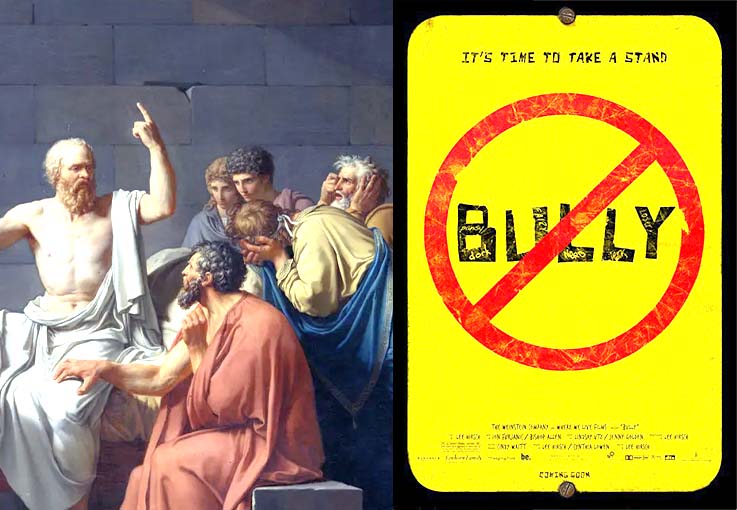
The 2,400-Year-Old Secret of Aggressive Interest.
Bullying has been around for as long as schools have existed.
Whether it’s teasing, rumours, name-calling, or someone trying to embarrass another student in front of their classmates, most children will witness bullying at some point, and many will experience it themselves.
Parents often tell their children to ignore it, walk away or tell a trusted adult. Those are all important strategies, especially if the bullying becomes ongoing or threatening.
But what if there was another tool?
Not a clever comeback, or a bigger insult or fight. Just a better question.
More than 2,400 years ago, an unusual man named Socrates turned the world of ancient Greece upside down by asking uncomfortable questions. His incessant questions publicly humiliated powerful and esteemed figures in front of the Athenian youth—who watched in amusement and began to imitate him. Through his relentless questioning (known as the Socratic method), he would approach prominent politicians, poets, and craftsmen to seek their wisdom. If they lacked understanding, his method would systematically expose that their knowledge was based on empty assumptions rather than actual truth.
If someone made a bold claim, Socrates wouldn’t fight them. He would simply ask:
“What do you mean?”
“How do you know?”
“Can you explain that?”
It sounds simple, but those questions often stopped confident people dead in their tracks.
Many discovered they couldn’t actually explain or support what they had just said.
That ancient way of thinking is just as useful for students today. Imagine a bully says, “Everyone thinks you’re weird.” Most people immediately defend themselves or become upset. But what happens if the response is calm?
“Everyone?” “Who exactly?”
“How do you know what’s weird?”
Suddenly, the person making the insult has to explain it.
Many bullies rely on confidence, speed, and an audience. They expect a reaction from a victim. When the reaction is calm, it takes the wind out of their sails. They don’t expect to be required to think. The goal isn’t to necessarily embarrass the bully or “win.” It’s to take the attention away from the insult and find whether the words make any sense.
These same questioning skills are valuable far beyond the school playground.
Every day we hear opinions from social media, television, friends, celebrities, and “experts.” Most people mean well, but confidence isn’t proof, popularity isn’t evidence, and even professionals can be wrong. There is a difference between Ethos (someone’s character or position) and Logos (the way a person thinks clearly and logically). Learning to ask thoughtful, logical questions helps us become better learners, better decision-makers, and independent thinkers.
There is, however, one small warning. Socrates questioned just about everyone, all the time. He really bugged people. History suggests this wasn’t always appreciated. While asking good questions is a valuable skill, knowing when to stop asking them is equally as important.
Published August 2026 Chitchat Newspaper.