
Bundaberg Regional Council’s new rates category for “non-principal place of residence” properties is a tax on renters by stealth.
Not only are general residential rates increasing by 8%, but rental properties are being hit with an additional 10% increase on top of that. Council first introduced this renters’ tax in last year’s budget, and it again scraped through by a single vote at this year’s budget meeting on 9 June.
More concerningly, Council plans to continue increasing this surcharge over the next two years, ultimately taking rental property rates to 140% of the general residential rates charge.
Rental properties are being taxed more heavily despite receiving no additional services in return, and Council’s justification raises serious questions.
Council told us via its Facebook page that residents living in a property owned by someone else apparently use roads more frequently and fill their bins more than owner-occupiers do. How Council arrived at that conclusion is anyone’s guess. Even if it were true, it hardly justifies charging these properties 140% of the general owner-occupied residential rate.
What is obvious, however, is that when the cost of providing a good or service increases, that cost is eventually passed on to the consumer. When wages rise, a café must increase the price of a cup of coffee to stay in business.
The rental market is no different.
The overwhelming majority of rental property owners are mum-and-dad investors. They are ordinary Australians who own a single investment property as a way of building financial security for themselves and their families.
Just this year they have faced higher costs, including further increases in interest rates and changes to negative gearing which the Federal Government admits will push rents up.
Property owners have mortgages to pay and a return on investment to maintain. When governments and councils continue to add costs, those costs do not simply disappear.
There are only two likely outcomes. The first is that rents increase. The second is that investors decide it is no longer worth the effort and sell their property, reducing the supply of rental housing and placing even greater pressure on an already strained market.
So when Bundaberg Regional Council increases rates on investment properties by 18% in a single year, it should come as no surprise that renters ultimately bear the cost. Those who rent are already facing higher prices for fuel, groceries and everyday essentials. The last thing people doing it tough need is another avoidable increase in their cost of living.
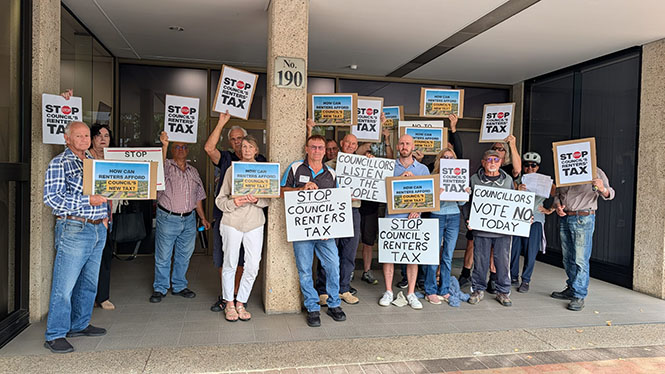
I feel strongly about this issue because I believe it is a sneaky cash grab cloaked in bureaucratic terminology. That is why, on the day before Council handed down its budget, I organised a protest outside the Council Chambers on Bourbong Street. I want to thank the 25 or so locals who joined us and stood together against the introduction of a higher renters’ tax.
One of those locals was a pensioner named John, who rents his home. John told us he attended because another rent increase could force him out of his home and place him at risk of homelessness.
It’s a heartbreaking story, and I have no doubt it is one of many. John bravely shared his experience with the media. I only hope the decision-makers were listening.
My hope is that, for the first time, credible opposition to this rates surcharge was heard and that Council may reconsider its plan to increase the renters’ tax even further in its next two budgets.
Written by Geordie Felesina
Published July 2026. Chitchat Newspaper.